Mapa-Múndi/BR

Rivane Neuenschwander
Mapa-Múndi/BR.

San Juan, Puerto Rico: Instituto de Cultura Puertorriqueña, c2009.
[24] p

Trienal Poli/Gráfica.
Impressão em offset
1.000 ex.

Livro sanfonado, como um conjunto de cartões-postais. Esta publicação faz parte de uma série de livros de artista publicados durante a “2da Trienal Poli/Gráfica de San Juan: América Latina y el Caribe”, realizada de 18 de abril a 28 de junho de 2009, organizada pelo Instituto de Cultura Puertorriqueña.

Fotografias de placas de estabelecimentos comerciais brasileiros que possuem o nome de algum país.

Artist / Author

Imagem

26 x 23.5 cm
183 p.
ISBN 1881616940

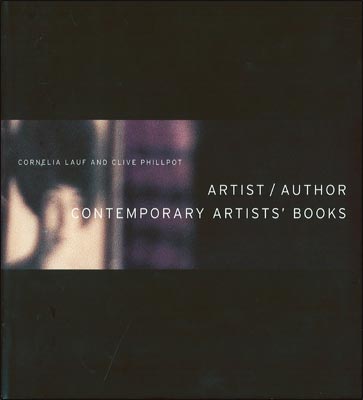
O catálogo de exposição Artist/Author, com curadoria de Cornelia Lauf e Clive Phillpot, tem layout de Renée Green. Textos de Cornelia Lauf, Clive Phillpot, Glenn O’Brien, Jane Rolo, Brian Wallis, e uma entrevista com Martha Wilson. Inclui lista de obras expostas, referências bibliográficas e índice de artistas citados.

Exhibition catalogue published in conjunction with show held at the Weatherspoon Art Gallery, Greensboro, North Carolina, February 8 – April 12, 1998; the Emerson Gallery, Clinton, New York, August 31 – October 18, 1998; Museum of Contemporary Art, Chicago, Illinois, November 6, 1998 – January 3, 1999; Lowe Art Museum, Coral Gables, Florida, February 18 – April 14, 1999; Western Gallery, Bellingham, Washington, April 30 – June 27, 1999; and University Art Gallery, Amherst Massachusetts, October 29 – December 18, 1999.

Book design by Renée Green. Text by Cornelia Lauf, Clive Phillpot, Glenn O’Brien, Jane Rolo, Brian Wallis, and an interview with Martha Wilson by Thomas Padon. Color and black & white photos throughout; includes exhibition checklist, bibliographical references and index.
Lire

Lire

Giovanni Anselmo, Lire.
Imschoot, Uitgevers
[80] pp.
Process: Offset-Printed
Edition size: 600
ISBN: 90-72191-15-3

Imagem

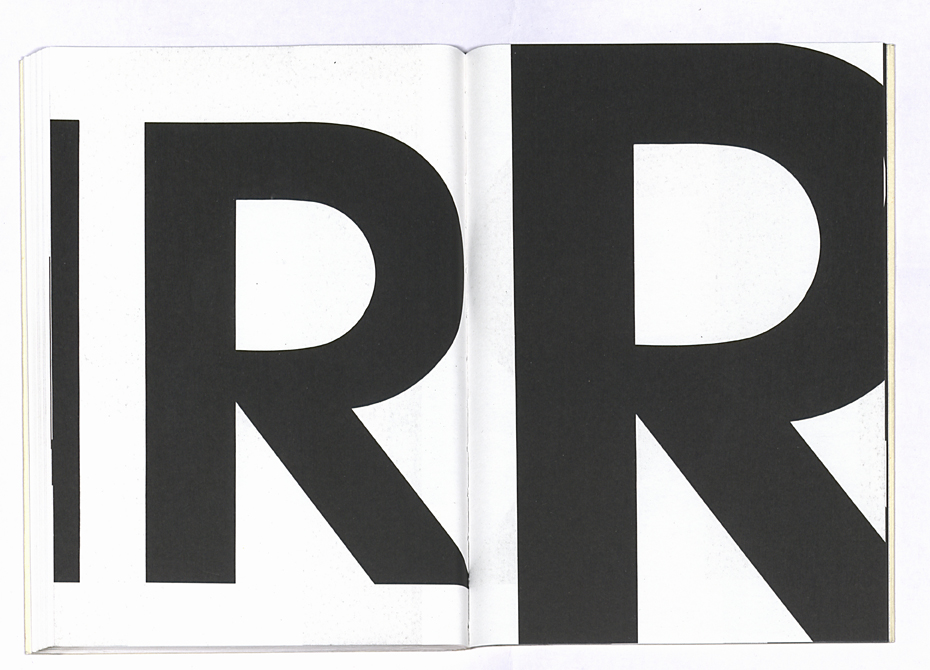
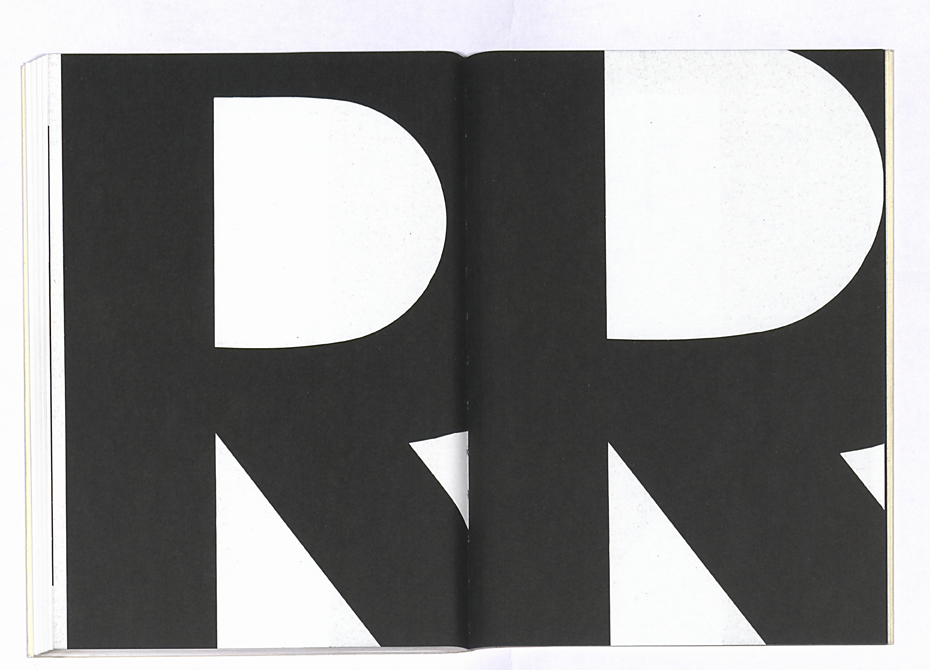
Escrito por um dos membros fundadores do movimento italiano Arte Povera, “Ler”, um trabalho sobre as propriedades visuais da palavra impressa, torna  físico o ato de ler uma palavra. Tomando a palavra única do título, o tamanho e a escala variaram na página até que uma progressão é estabelecida. Como resultado, o espectador se encontra “lendo” do mesmo modo que vê. A palavra, a tipografia, a proporção da área impressa da página, a relação entre o branco e o preto: Anselmo produz uma verdadeira taxonomia do livro.

Imagem

Written by a founding member of the Italian movement, Arte Povera, “Lire,” a work about the visual properties of the printed word, makes physical the act of reading one word. Taking the simple word of the title, Anselmo varies its size and scale on the page until a progression is established. The result finds the viewer “reading” in the same manner he / she sees. The word, its lettering, the ratio of print to page, the relationship of white to black : Anselmo produces a veritable taxonomy of the book.

ImagemImagemImagemImagemImagem

Revista

Revista, 2009

Marcelo Silveira (Gravatá/ PE, 1962)
Revista
Recife : Ed. do Autor, 2009.
[96] p. : il. p&b
30 x 23 x 1 cm.
Offset.
1.000 ex.

Texto em português e inglês.
edição de fotografia e projeto gráfico: Marcelo Silveira e Robson Lemos
Texto de Moacir dos Anjos
tradução: Paul Webb

Revista_MSilveira2

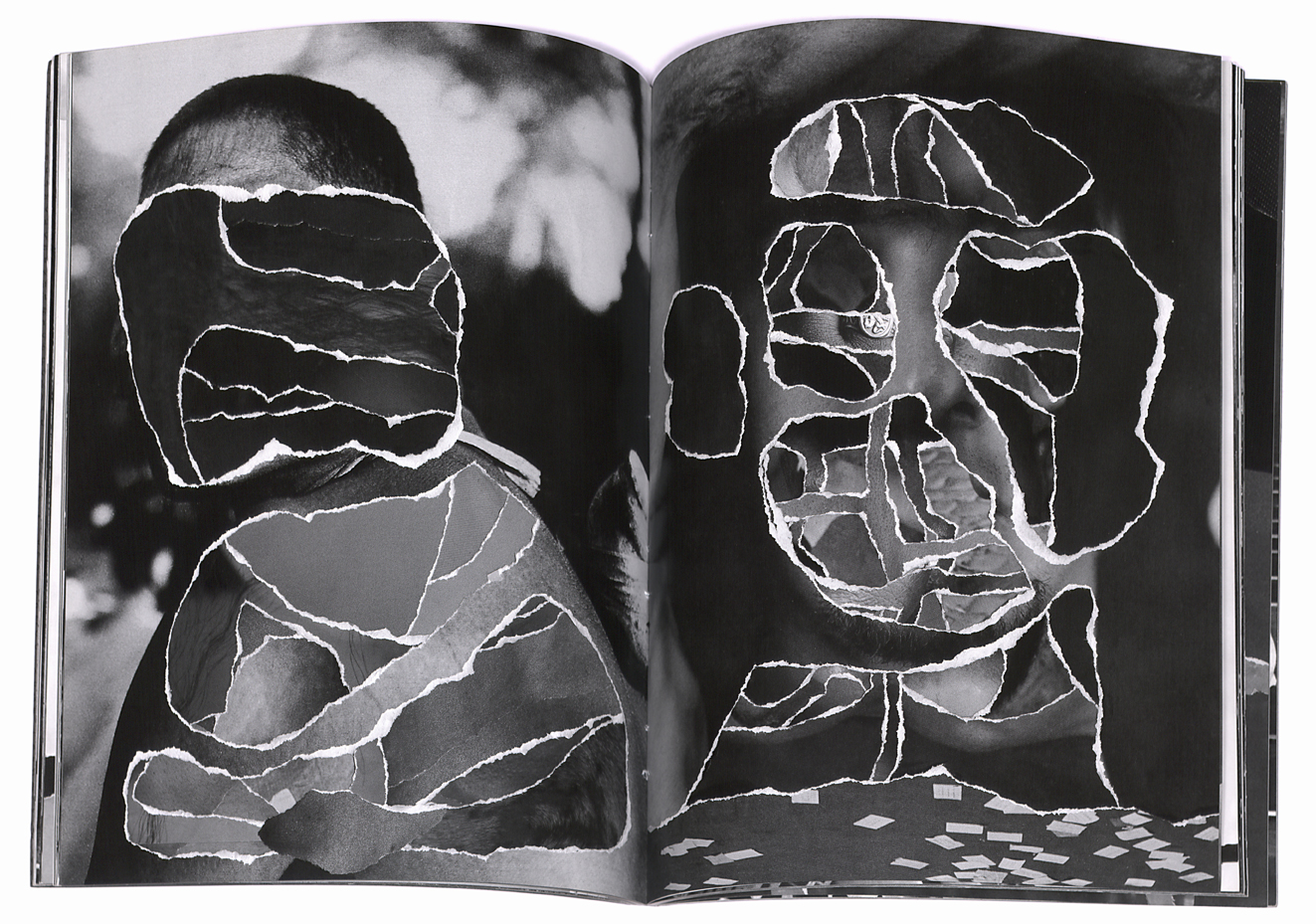
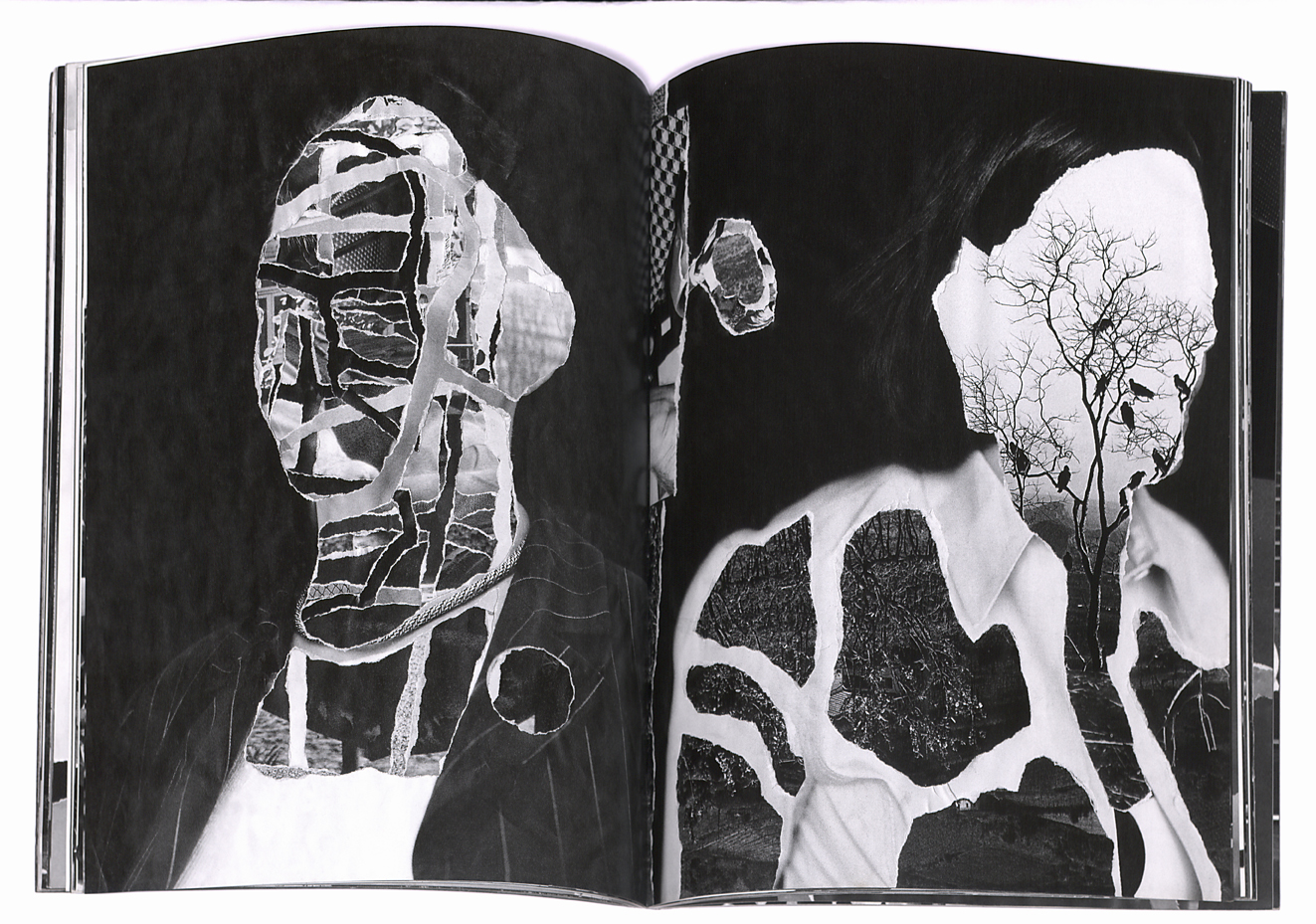
Livro de artista, reproduz colagens em preto e branco, feitas a partir de reproduções de imagens impressas em revistas e livros. Trabalho realizado a partir dos originais produzidos por Marcelo Silveira e equipe (Ateliê), no período de 2008 a 2009.
 silveira_marcelo_Image00070 silveira_marcelo_Image00071

Mais info: http://marcelosilveira.art.br/

Salvar

The Illustrated Dictionary of Received Ideas

ImagemGareth Long & Derek Sullivan.
The Illustrated Dictionary of Received Ideas
[Toronto], 2010
228 p.
21,5 × 27,8 cm
25 ex.

http://garethlong.net/

Imagem

Imagem

The Illustrated Dictionary of Received Ideas
Gareth Long & Derek Sullivan
Drawing Session/Performance – Smack Mellon, Brooklyn, USA. June 2009.

2009-ongoing

Since 2009 Gareth Long and Derek Sullivan have worked towards an on-going project to illustrate and translate Flaubert’s Dictionary of Received Ideas. Seated at an iteration of Long’s Bouvard and Pécuchet’s Invented Desk For Copying, a series of desk-sculptures pulled from the unfinished pages of Gustave Flaubert’s incomplete last novel, the two artists intend eventually to illustrate every entry in Flaubert’s posthumously published satirical dictionary – a text that contains 950 biting and surprisingly contemporary entries lampooning bourgeois French society of the time. Flaubert had intended to include this text as part of the second half of the novel Bouvard and Pécuchet. Long and Sullivan’s project has them draw images copied from the Internet (the dilettante’s library of today, and one that parallels the vast library embedded within Flaubert’s novel) which brings the surprisingly contemporary platitudes up to date, and match Flaubert’s own caustic wit and meta-references with a disarmingly funny, charming (and sometimes school-boyish) sense of humour. Just as the desk-sculptures act as an illustration of the final moments of the novel, with Long and Sullivan seated at them, they too become a sort of extended illustration of the eponymous characters. A self-professed ‘crap drawer,’ Long’s lack of skill as an illustrator for the Dictionary is a form of illustration itself: his drawings are obviously those of an amateur, just as Bouvard and Pécuchet are destined to remain amateurs in each of their endeavours. And so, by ‘copying’ the two characters in the novel, Long and Sullivan’s drawing sessions contribute to the seemingly endless cycle of mimicry and citation taking place in the book.

Long and Sullivan compile their collected illustrations in an on-going series of bookworks (there are 6 iterations to date), designed by Mike Gallagher, titled The Illustrated Dictionary of Received Ideas.

Long and Sullivan have worked on the Dictionary through more than 23 illustrating sessions to date, which have included public drawing sessions at MoMA PS1, Printed Matter, Smack Mellon, Kate Werble Gallery, and the Bloomberg Building in New York; The Power Plant, Mercer Union, Art Metropole, the AGYU, Oakville Galleries and Jessica Bradley Art + Projects in Toronto; The Southern Alberta Art Gallery, Lethbridge; READ Books at the Charles H. Scott Gallery, Vancouver; The Musée juste pour rire in Montreal; Flat Time House in London, England; Shandy Hall in Coxwold, England; and Wiels in Brussels.

Salvar

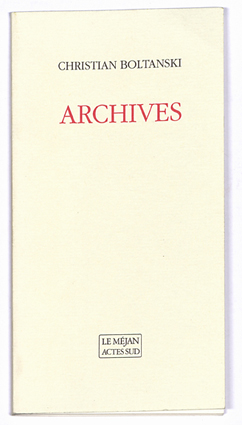
Archives

Imagem

Christian Boltanski  (França,  1944)
Archives
Arles, France : Actes Sud, c1989.

[42] p. : il. fots. p&b
19 x 10  cm.
(broch.)
ISBN 2868693911

Imagem

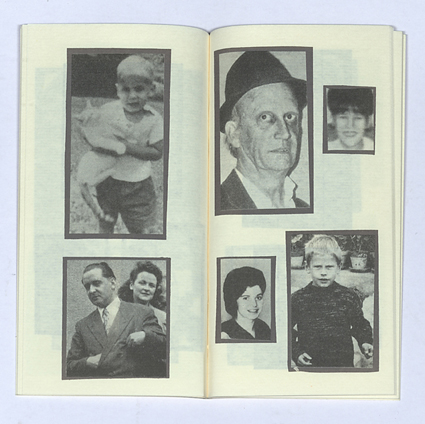
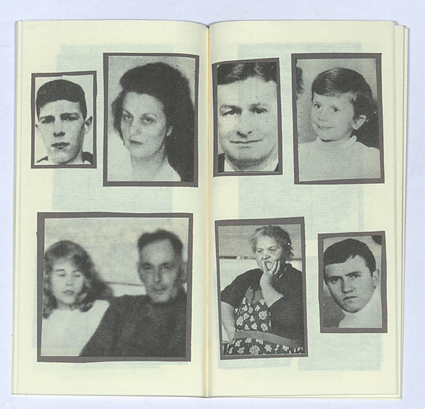
Estas imagens foram recortadas durante o ano de 1972 de um jornal semanal especializado em notícias criminais; elas mostram os rostos inexoravelmente entrelaçados, assassinos ou vítimas, desses dramas esquecidos. (texto retirado do livro)

Editado por ocasião da exposição Christian Boltanski na Eglise Saint-Martin du Méjan d’Arles de 03 de julho a 03 de setembro de 1989.

Imagem

Ces images ont eté découpées pendant l’année 1972 dans un hebdomadaire spécialisé dans lesfaits divers criminels; elles présentent inexorablement mêlées les visages, assassins ou victimes, de ces drames oubliés.

Salvar

Encosto Não se Discute

“Encosto é coisa que não se explica, não se nega,
não se discute.”

Imagem

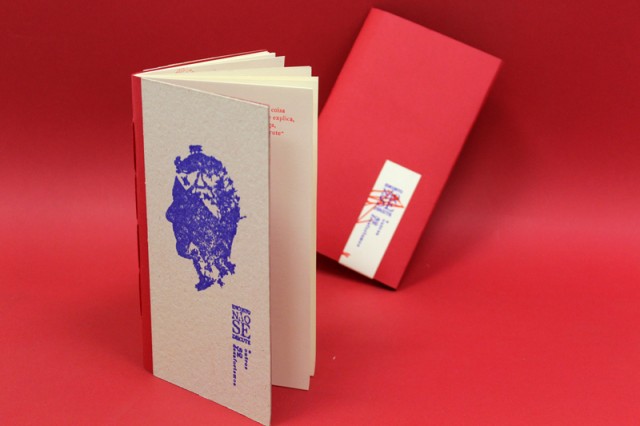
O projeto Encosto Não se Discute nasce da ideia de produzir um elemento artístico- literário provocativo e artesanal. Para isso, todo o conteúdo foi produzido em carimbos e a montagem do livro feita de forma manual. No total, são setenta e quatro carimbos que representam uma releitura de frases e expressões popularmente conhecidas (“nem tudo o que seduz é louro”, “dois corpos não ocupam o mesmo despacho”). Cada uma destas frases tem o conceito fortalecido por uma ilustração criada especialmente para o projeto, também em carimbo.

Conceitualmente, Encosto Não se Discute é aquela coisa que não sai da gente nem se a gente quiser. É fenômeno, possessão, entidade criativa carimbada na alma e na carne, é vontade desencostada da sombra. Um nó de palavras e imagens que cutucam o nosso jeito de sempre de ver as coisas como nunca.

Um projeto feito de palavras, imagens, suor e tinta.


Felipe Valério | lançou coisa como Hotel Trombose (Edith), Sem Casca e Filé em Tiras (Publicações Iara).  Apareceu nas antologias Maus Escritores (Demônio Negro), Mamãe, Vim Só Fazer uma Visita Rápida (Edith) e no livro de artista Convite (Publicações Iara). É um dos autores dos projetos Granja, Boca Santa e Três Meia Cinco. 

Pedro Mattos | aprendeu a pensar, fotografar e desenhar para que outros ouçam o que ele não fala. Durante o dia trabalha para ganhar o pão e pela noite sacia-se libidinosamente com suas elegantes garatujas. Entre suas realizações mais recentes estão o 1º Prêmio Cartaz Museu da Casa Brasileira 2011 e uma nominação de excelência tipográfica no Type Directors Club de NY.

(via loja da iara)

Grapefruit

Yoko Ono
Grapefruit: a book of instructions + drawings
introduction by John Lennon.
New York, NY : Simon & Schuster, 2000.
ISBN 9780743201100

“Thirty years ago, in 1962, I did an exhibition of instruction paintings at Sogetsu Art Center in Tokyo. A year before, I did a show of instruction paintings at AG Gallery in New York, but that was exhibiting canvases with instructions attached to them. Displaying just the instructions as paintings was going one step further, pushing visual art to its optimum conceptualism; it would open up a whole new horizon for the visual arts. I was totally excited by the idea and its visual possibilities. To make the point that the instructions were not themselves graphic images, I wanted the instructions to be typed.”
(From the book Yoko Ono: Instruction Paintings, 1995)

http://www.a-i-u.net/yokosays.html

Salvar

Twentysix gasoline stations

Twentysix gasoline stations.jpg

Michalis Pichler (Berlim/ ALEMANHA, 1980)
Twentysix Gasoline Stations
New York: Printed Matter, 2004.
36p.; il. col.
14 x 18 cm
Offset
550 ex.
Brochura
First edition 550 copies, limited ed. 50 with white UV-varnish on cover; second ed. 1000
ISBN: 978-0-89439-044-9

Há um tipo especial de posto de gasolina que foi construído em toda a República Democrática Alemã (ou seja: ao redor de uma vasta área de Berlim) pela Total, uma companhia petrolífera francesa, depois que o muro foi derrubado e eles expandiram seus negócios durante os anos 1990. Todos eles foram fotografados.

Ruscha uma vez declarou em uma entrevista que ao criar seu primeiro livro, que veio a  ser um modelo de “livro de artista” (e, hoje em dia, altamente colecionável) o título veio primeiro. Então ele pegou um volume de 70-90 fotografias de postos de gasolina e eventualmente “os postos excêntricos foram os primeiros que eu joguei fora.”


There is one particular Gasoline Station which was built all over the former German Democratic Republic (that is: all around the wider area of Berlin) by Total, a French Oil Company, after the wall came down and they expanded their business during the 90’es. All those were photographed.

Ruscha once stated in an interview, that when creating his first book, which came to be an “artist book” role model (and, nowadays, high-end-collectible) the title came first. He then took a bulk of 70–90 photographs of Gas Stations, and eventually “The eccentric stations were the first ones I threw out.”

[fonte]

Salvar