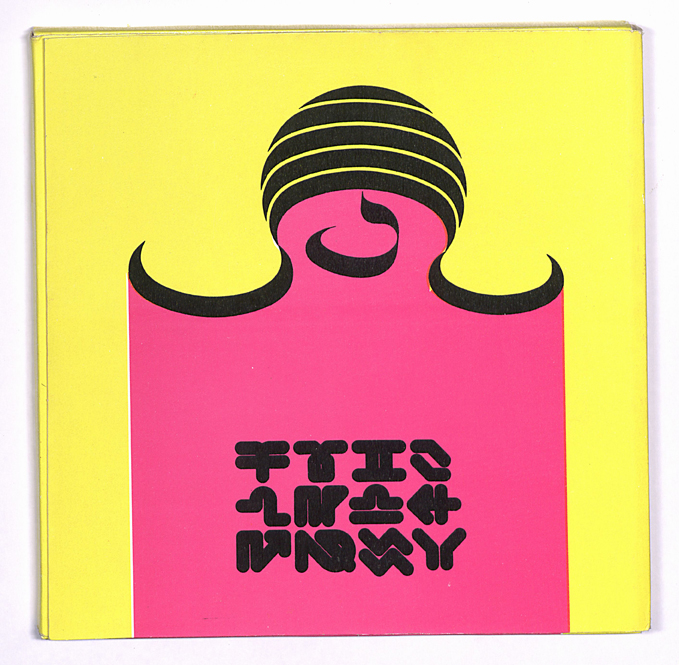
Doubles-jeux

E1P3-01

Sophie Calle
Doubles-jeux
Arles: Actes Sud, c1998.
7 v. em caixa: il. color.
19,5 x 10 x 6,5 cm.
Brochura.

Conteúdo completo:
De l’obéissance: lé régime chromatique; des journées entières sous le signe du B, du C, du W (livre 1)
Le rituel d’anniversaire (livre 2)
Les panoplies (livre 3)
A suivre… : préambule; suite vénitienne; la filature (livre 4)
L’hôtel (livre 5)
Le carnet d’adresses (livre 6)
Gotham handbook : New York mode d’emploi (livre 7)

Traduzido do francês por: Christine Le Boeuf

“Ce coffret a été réalisé à l’occasion de l’exposition “Doubles-Jeux” de Sophie Calle au Centre national de la photographie du 9 septembre au 2 novembre 1998″ — Livre 1, p. [6].

ISBN : 9782742718634 (set)
ISBN : 9782742718641 (v. 1)
ISBN : 9782742718658 (v. 2)
ISBN : 9782742718665 (v. 3)
ISBN : 9782742718672 (v. 4)
ISBN : 9782742718689 (v. 5)
ISBN : 9782742718696 (v. 6)
ISBN : 9782742718702 (v. 7)

South America

south-america-richard-long_Página_1

Richard Long
South America
Brest : Éditions Zédélé, 2012 [Konrad Fischer, Düsseldorf, 1972]
[36 p.]
12,8 x 12,8 cm
ISBN 978-2-915859-36-2

 south-america-richard-long_Página_2

south-america-richard-long_Página_3

Publié avec le soutien de / published with the support of:
Konrad Fischer Galerie (Düsseldorf)
Centre national des arts plastiques (Cnap)
Centre d’art Passerelle (Brest)

south-america-richard-long_Página_6

south-america-richard-long_Página_7

One of the most important British artists, Richard Long is a sculptor and photographer whose work derives from walking through nature during long, often solo hikes all over the world. Since 1971, his books, generally of words and/or photographs, which he designs, keep track of his walks, more like a new work rather than reporting.

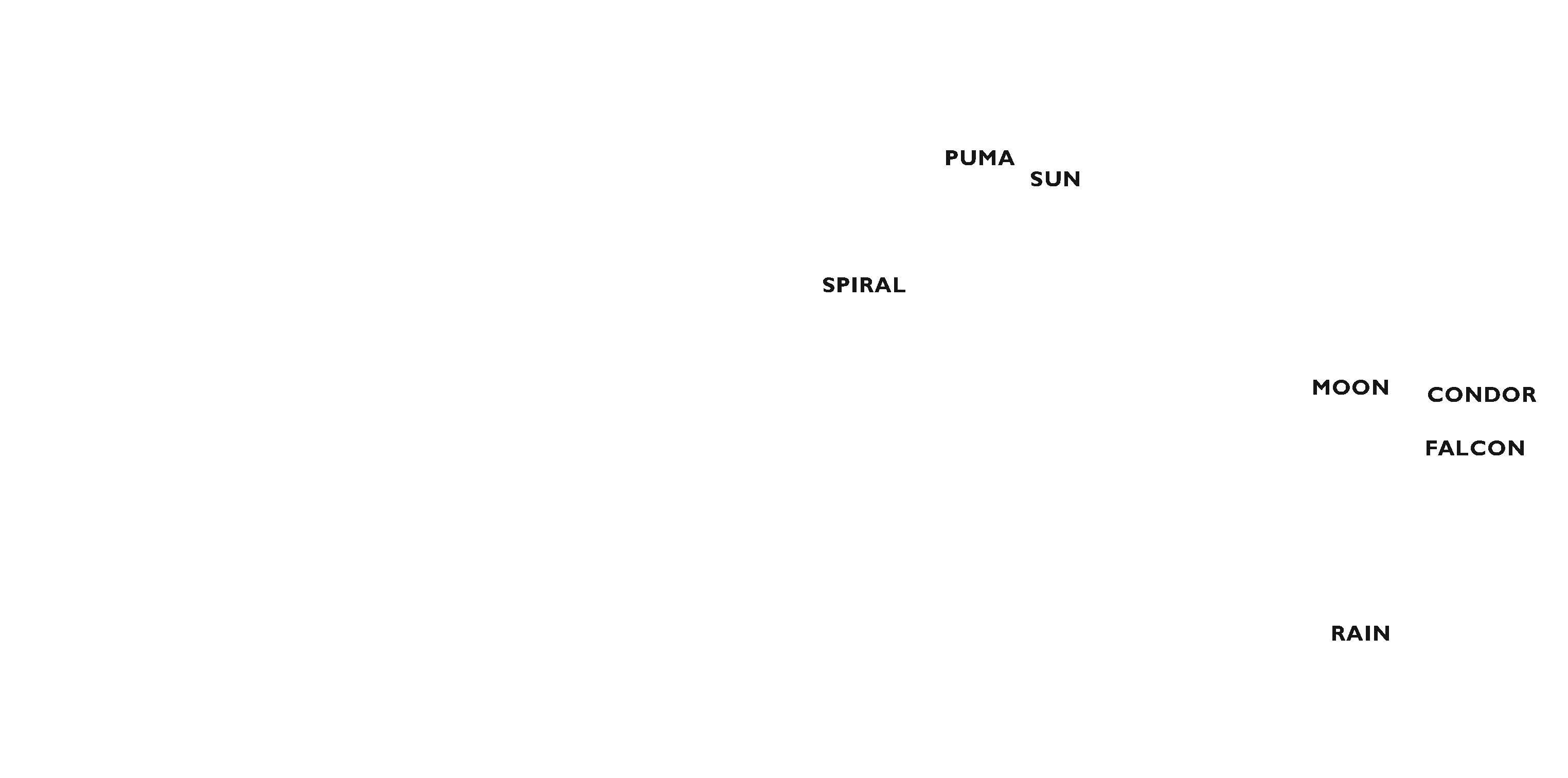
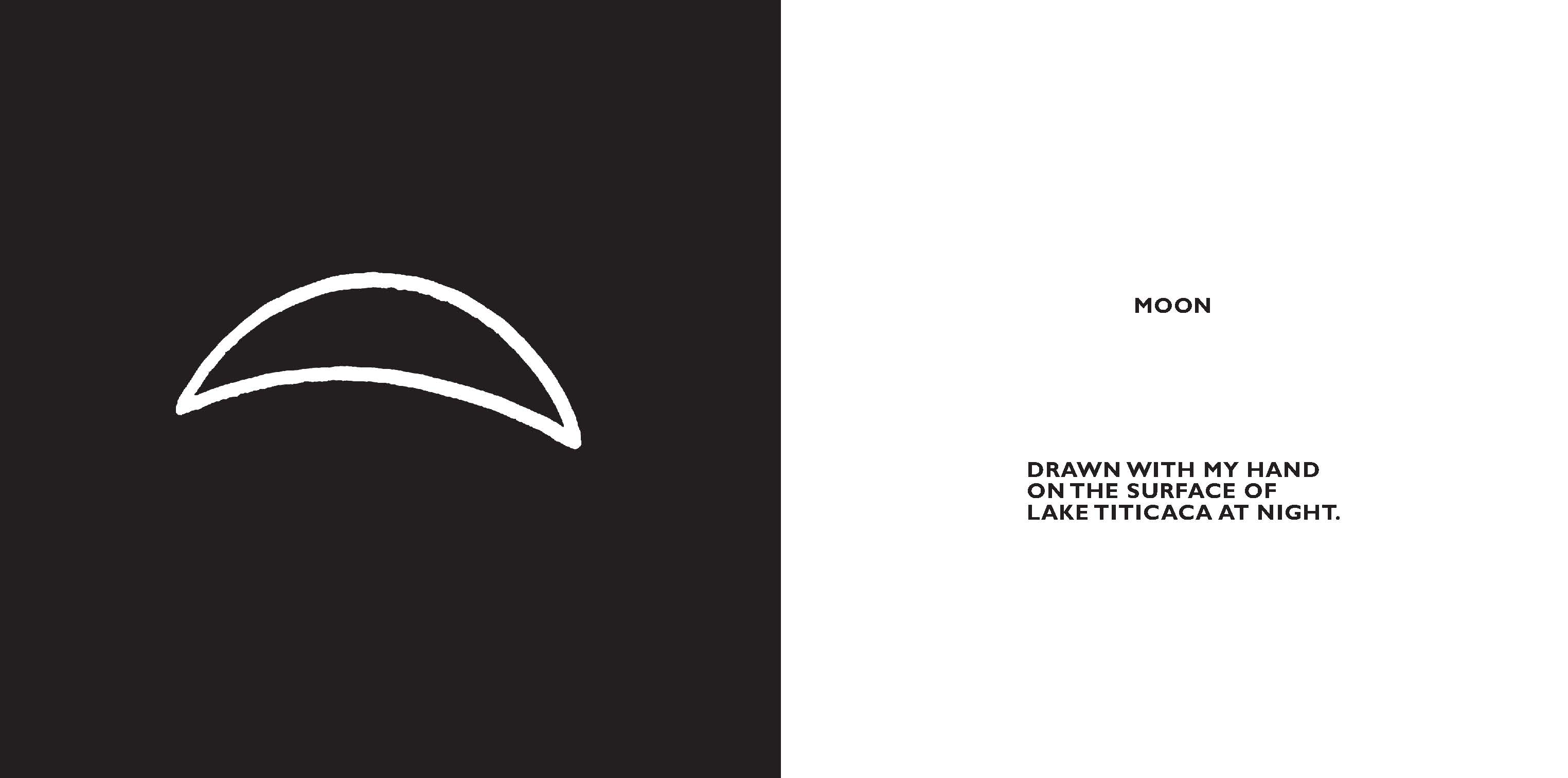
His third book, South America which is unique because of its square shape, shows only drawings: a small number of stylized motifs (sun circle, silhouette of a condor, spiral, etc) were drawn during a hike across South American with natural materials found onsite (pebbles, gold dust, etc) under circumstances that a short legend describes. These sketches are printed twice, once in positive (black on white) and once in negative (white on black), on the front and back of the same page. A connection is thus established between the drawings and photographic prints, by alluding to positive and negative images.

south-america-richard-long_Página_4

south-america-richard-long_Página_5

 An unpublished text by Richard Long is inserted in the book:

‘SOUTH AMERICA’ was made on the first big overseas journey Hamish Fulton and I made together.  We landed in La Paz and travelled in Bolivia, Peru and Chile for almost two months. I had pre-conceived the idea for a book, but not the particular places or images it might contain.  We travelled by hitch-hiking cars and communal trucks, on buses, on trains, by taxi, and by walking and climbing. We had a free and adaptable itinerary, often changing our plans on impulse or by circumstance. This fitted the general idea for the book, so that the great variety of places for the drawings occurred naturally, by chance, along the way. It is a book about movement, time, space, luck and opportunism. I had not seen the moon ‘upside down’ before. The positive/negative printing of the drawings comes from the characteristic of Indian weaving, and the cover drawing was influenced also by the traditional patterns of the blankets etc. we saw in the local markets.

—  Richard Long, Bristol, March 6, 2012

http://www.editions-zedele.net/reprint/south-america.html

Salvar

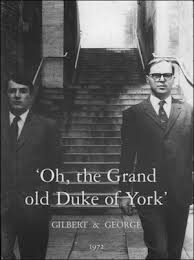
Oh, the Grand Old Duke of York

gilbert_duke

Gilbert & George
‘Oh, the Grand Old Duke of York’
Köln, Germany: Oktagon Verlag, 1996
offset-printed
staple bound
black-and-white
11.2 x 8.3 cm.
[unpaginated]
edition size 900
unsigned and unnumbered
ISBN 3896110071

Gilbert---George-Oh-the-Grand-Old-Duke-of-York-72

Gilbert---George-Oh-the-grand-old-duke-of-york-72-1

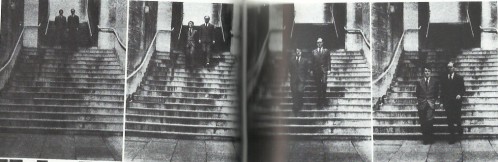
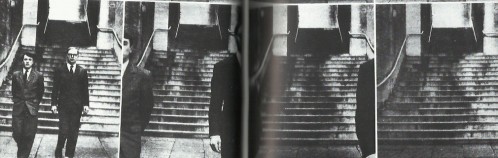
A quaint artists’ book in flip-book format that pictures a young Gilbert & George descending a staircase.

“This work was first published in 1972 as a catalogue of the Kunstmuseum Lucerne.”

Salvar

Indutor de percepção cotidiana

Indutor de percepção cotidiana

Mariane Rotter
Indutor de Percepção Cotidiana
Erechim, RS: Edelbra, 2006.
[48] p. : fots. color.
19 x 15 x 0,5 cm.
Impressão em offset
500 ex.

O livro apresenta uma sequência de fotografias, criando diálogos entre as imagens captadas no cotidiano da artista, em Porto Alegre. O livro tem tamanho pequeno para que seja agradável de manusear, e aconteça mais facilmente sua dispersão e disseminação pelos diversos caminhos e cidades que a artista percorrer. Este diálogo toma outra dimensão no arranjo das fotografias, assim como no momento em que o público fizer a sua leitura, folheá-lo, relacionando o seu cotidiano com aquele captado por Mariane – como uma intimidade comum.

O livro está disponível em PDF no site da artista: http://www.marianerotter.net

http://issuu.com/marianerotter/docs/indutor_de_percep____o_cotidiana_li/1

Pinxit

Voir détail
Laurent Marissal
PINXIT 1997-2003
Rennes: Incertain Sens, 2005
[226] p.
offset p&b
22 x 14 cm.
1000 exemplares
ISBN 978-2-914291-18-3

Verão de 1993, o pintor Laurent Marissal é empregado como agente de vigilância no museu Gustave Moreau. De abril de 1997 a janeiro de 2002, ele fez desta alienação o material de sua prática. Ele usa para fins pictóricos seu tempo de trabalho vendido ao Ministério da Cultura.
Ele desvia a força de trabalho vendida ao museu, se apropria desse tempo meio de subsistência e transforma-o em tempo meio de existência. Esta desalienação, cujo princípio primordial é a recuperação do tempo materializada em ações relacionadas com a sua prática: pintar, escrever, ler …

Inverno de 1998, ele abriu uma seção sindical da CGT, ferramenta administrativa para implementar o seu projeto pictórico: modificar realmente as condições, o tempo e o espaço de trabalho.

“Été 1993, peintre, Laurent Marissal est employé comme agent de surveillance au musée Gustave Moreau. D’avril 1997 à janvier 2002, il fait de cette aliénation la matière de sa pratique. Il utilise à des fins picturales le temps de travail vendu au ministère de la culture.
Il détourne sa force de travail vendue au musée, se réapproprie ce temps moyen de subsistance et le transforme en temps moyen d’existence. Cette désaliénation, dont le principe privilégié est le recouvrement du temps, se matérialise dans des actions liées à sa pratique : peindre, écrire, lire…
À son insu, le musée rémunère une production dont il n’aura pas la jouissance. Ce rapt est systématisé.
Hiver 1998, il ouvre une section syndicale CGT, outil administratif, pour concrétiser son projet pictural : modifier réellement les conditions, le temps et l’espace de travail.

http://www.sites.univ-rennes2.fr/

Salvar

Robin Redbreast’s Territory

dibbets_12942%5B1%5D

Jan Dibbets
Robin Redbreast’s Territory
Zédélé, 2013
1ª edição: Seth Siegelaub, New York e Walther König, Köln, 1970
12,1 x 18,3 cm
32 p.
Brochura
ISBN 978-2-915859-45-4

Texto in holandês, inglês, francês e alemão

dibbets_getimage

O livro Roodborst Territorium/ScuIptur (1969) de Jan Dibbets, é um documento fotográfico e projetual sobre um trabalho que não é possível ser visto na sua totalidade e que não pode ser recomposto senão através de documentos. A ideia de Dibbets, que consiste em fazer depender sua “escultura” de um pássaro em voo, não é possível senão através de imagens que possibilitam sua existência sensível e acreditável, existência que consiste na variação de forma de uma região a partir da ideia da captura e delimitação das fronteiras espaciais, fronteiras estas delimitadas e indicadas por 5 estacas de madeira onde descansa o pássaro entre os voos. A delimitação destas fronteiras é relativa porque a noção de território se origina na biologia e na ecologia do sistema ao qual o pássaro pertence. O pássaro, nos seus deslocamentos, voa entre as estacas dos 5 pontos diferentes num parque de Amsterdã, configurando seu território biológico. Se o livro apresenta a elaboração e a execução, dando detalhes sobre o procedimento, o tempo registrado, o trabalho material mesmo não deixa traços a não ser no livro.

Julio Plaza, O livro como forma de arte II, 1986

Robin Redbreast’s Territory  is a book documenting a 1969 installation in an Amsterdam park by Jan Dibbets, who observed and highlighted the movements of a robin through a series of photographs. The book, published in 1970, is Dibbets’ only Artist’s book.

After learning about the habits of robins, Jan Dibbets decided to extend the territory of one robin, setting new boundaries with poles that the bird would perch on; in this way, the robin participated in the artist’s ‘Drawing in Space’.

The book’s left-hand pages feature photographs and topographical surveys, alongside handwritten notes by the artist, which are rendered in three other languages (English, French and German) on the right-hand pages.

After giving up painting in 1967, Jan Dibbets began creating ephemeral installations in nature and taking photographs of them. The act is not an end in itself for the artist: his preoccupation is with preserving the meaning of the work, because ultimately what is important is not the reality of the installation but the idea that inspired it.

Robin Redbreast’s Territory is the 6th book to be published in the Reprint collection curated by Anne Moeglin-Delcroix and Clive Phillpot.

“Early in his development Jan Dibbets used the camera to provide a different, specifically monocular, perspective on the world, literally through his ‘perspective corrections’, but also by other means such as the series of photographic panoramas that led to the Dutch Mountains works.

At the same time he was developing the concept of Robin Redbreast’s Territory / Sculpture which ‘was part of a number of ideas which involved our eco-system, a word which hardly existed at that time’. The book’s text describes how Dibbets obtained an insight into the habits of the common European robin through his reading of a book on the subject, even though he was ‘not interested in biological facts,’ but rather ‘with the frontiers of the visual arts.’

Dibbets’s idea was to harness his new understanding of the habits of the robin to his notion of drawing in space and his desire to visualise ecological systems. However, he ‘realised that there was no way to share it with others’ until ‘the idea of the book came along’ thereby establishing an appropriate means.

He had been working with the gallerist and publisher Seth Siegelaub in 1969: ‘I told Seth about it. He immediately was very enthusiastic and after I delivered him all the material, he took care of everything. I only worked with Seth.’

So it was that this example of the book as artwork came about, whereby understanding of the entirety of the work is only possible by means of the artist’s book.” (Text inserted in the book)

http://www.editions-zedele.net/reprint/robin-rebreasts-territory-sculpture_jan-dibbets.html
Percursos narrativos

E3P4-08

Fabio Morais e Rafael RG.
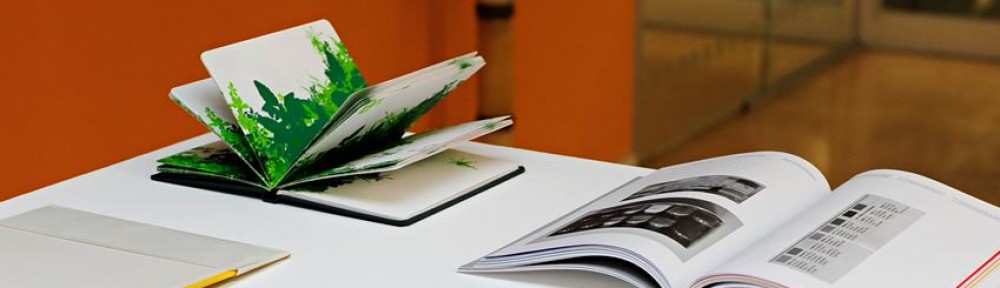
Percursos narrativos [conjunto de peças]
[São Paulo] : Beco da Arte, 2010.

Material acondicionado em caixa de MDF.
1 Kit em caixa de 17 x 33 x 4,5 cm.
Impressão laser com tiragem de 100 exemplares numerados.
Exemplar 1/100.  

Conteúdo completo:
Fabio Morais (5 folhetos de cordel):
– IKBlues Band & suas musas ;
– Flavito ;
– … e eu ;
– Livro ;
– 9 capítulos na vida do senhor Abreu.

– 1 pedaço de barbante dobrado e amarrado
– 1 placa de MDF (3 x 9 cm) com 5 pregadores de roupa de madeira
– 2 pedaços de elástico amarelo.

Rafael RG
– Entrevista a Hans Ulrich Obrist