Point d’ironie

E1P4-04

Point d’ironie
directeur de la publication: Agnès b.
rédacteur en-chef: Hans-Ulrich Obrist
chargé d’édition: Carrie Pilto.
Paris: Agnès b., 1997-
43 x 31 cm.
ISSN : 1967-7774

Editado 6 vezes por ano, em formato tablóide de 8 páginas. Cada edição foi realizada por um artista convidado. Repetição e diferença em cada número. A revista tem tiragem de 5 mil exemplares, com distribuição gratuita.

Volumes disponíveis no acervo:
[n.] 33. Philippe Parreno
[n.] 34. Michel Foucault
[n.] 36. Tacita Dean
[n.] 37. Ed Ruscha
[n.] 38. Ryan McGinness, Papier d’emballage
[n.] 39. Richard Prince
[n.] 44. Hugues Reip et Melanie Counsell
[n.] 45. Robert Crumb
[n.] 46. Carlos Cruz-Diez, Chromosaturation, Paris 1965
[n.] 47. Koo Jeong-a
[n.] 48. Walid Raad
[n.] 49. Ryan McGinley
[n. especial.] Stéphane Hessel et Pascal Lemaitre
[n.] 50. Christian Boltanski.

O “ponto de ironia” é representado por um ponto de interrogação e exclamação invertidos. O ponto de ironia é um “sinal especial de pontuação proposto por Brahm Alcanter para indicar ao leitor as frases irônicas em um livro ou artigo” (Larousse do século XX, 1932).

http://www.pointdironie.com/

Echo Book

echob1

Ronald King
Echo Book
London: Circle Press
20 x 8 cm
8 p.

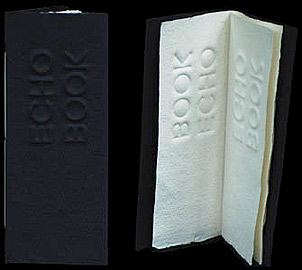
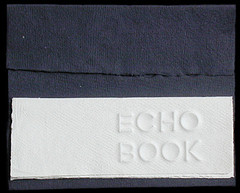
A small booklet with the words ‘ECHO BOOK’ printed in wire and blind embossed to read ‘BOOK ECHO’ on the reverse of the page.

The impression fades as the pages are turned in sequence. Two 4 pp sections – 20×8cm on Khadi hand-made paper, sewn into a blind embossed blue paper cover.

http://shop.circlepress.com/products/echo-book

echobook1_medium

Ron King has had an artistic life that spans a multi faceted and inspiring 60 years.  His iconographic work is marked by a distinctive, fresh and often pioneering approach. As an artist his work can’t be pinned down to by genre but it does have an approach that is hallmarked by a distinctively curious, questioning and energetic approach.

Born in São Paulo, Brazil in 1932, Ron still has a strong attachment to the country and its culture.  At the age of 12 he became fascinated with the macabre photograph that he saw in a book of his father’s of the decapitated heads of the infamous bandit leader Lampião and his notorious band.  An image that he still can’t quite let go of today and one that has informed a long exploration which you can find expressed in much of his work to do with masks and character.  Sent to England in 1945, Ron attended Ardingly College in West Sussex and in 1951 he went on to gain entrance to Chelsea School of Art.

http://www.ronkingstudio.com/pages/profile

Cartoon Hits

cartoon hits

Christopher Sperandio (1964, Kingwood, EUA)
Simon Grennan
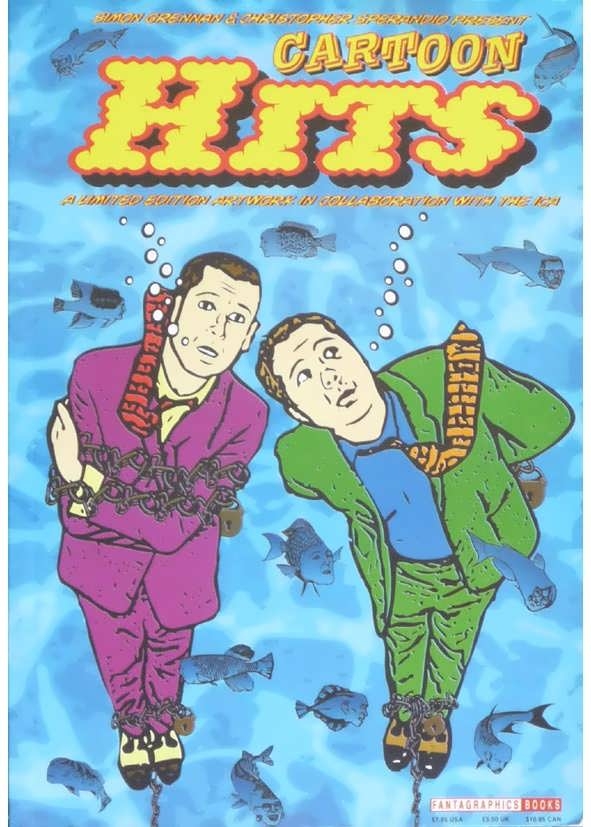
Cartoon Hits: An Unique Artwork Collaboration with the ICA
London: Institute of Contemporary Arts ; Seattle: Fantagraphics Books, cop. 1996
26 x 18 cm
52 p.
texto em ingles
10.000 exemplares
ISBN-13: 978-1900300001

Estudantes do Institute of Contemporary Arts de Londres foram convidados a contar seus sonhos para a dupla de artistas, depois posaram para fotografias, que foram transformadas em desenhos com o auxílio de um programa de computador.

http://www.kartoonkings.com/

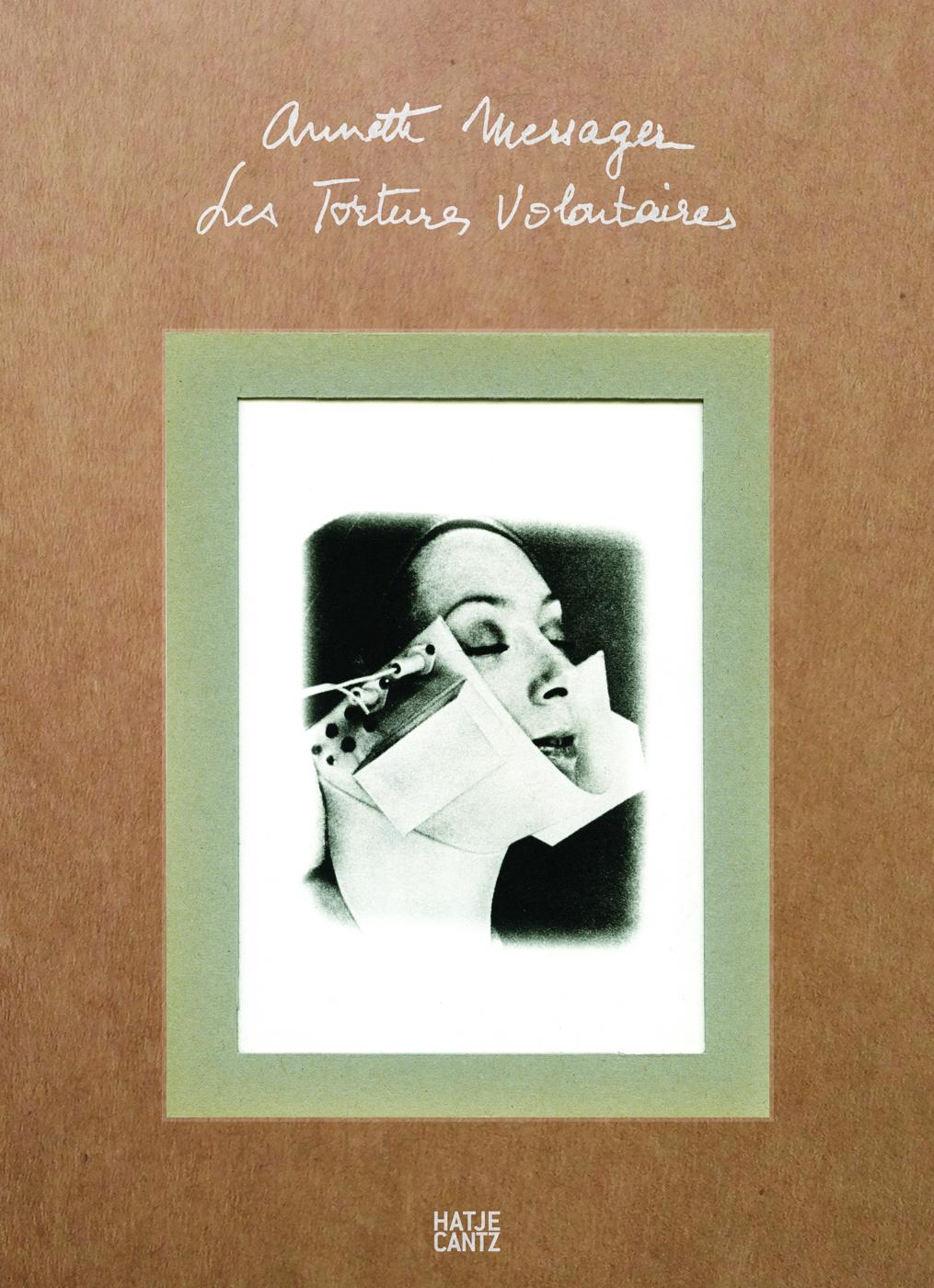
Les Tortures Volontaires

00003686

Annette Messager
Les Tortures Volontaires / Voluntary Tortures
Textos de Annette Messager
Projeto gráfico Katja Jaeger
Hatje Cantz, 2013
Alemão, Inglês, Francês
92 p., 82 ills.
25,60 x 33,50 cm
ISBN 978-3-7757-3686-2

messager les-tortures-volontaires (4)

“A beleza não conhece nenhuma dor” é uma frase que, após um exame mais minucioso, é chocante e perturbadora. A artista francesa Annette Messager (nascida em 1943 em Berck) começou a perseguir essa ideia nos anos setenta, quando ela reuniu fotografias de revistas para sua inovadora série Les Tortures volontiers (Tortura voluntária).

messager les-tortures-volontaires (8)

Nas fotografias de Messager, que são tão alarmantes quanto absurdas, os seios são levantados por ventosas, coxas são massageadas com eletricidade, a esfoliação parece uma segunda camada de pele que foi removida. No entanto, o riso fica preso na garganta do espectador, porque mulheres em todo o mundo ainda se submetem a estes e outros procedimentos, a fim de se aproximar mais do padrão e parecer mais “bonitas.”

Messager recentemente redescobriu essas impressões em seu estúdio. Esta é a primeira vez que a série de oitenta e uma imagens foi publicada em sua totalidade e em seu tamanho original. No ensaio que acompanha o livro, a artista, cujo trabalho tem sido exibido várias vezes na Documenta, discute a gênese da série.

messager les-tortures-volontaires (7)messager les-tortures-volontaires (6)

“Beauty knows no pain” is a phrase that, upon closer scrutiny, is shocking and disturbing. The French artist Annette Messager (*1943 in Berck) began pursuing this idea in the seventies when she assembled photographs from magazines for her groundbreaking series Les Tortures Volontiers (Voluntary Torture).

In Messager’s photographs, which are as alarming as they are absurd, breasts are lifted into suction cups, thighs are massaged with electricity, exfoliations look as if a second layer of skin is being peeled off. Yet the laughter sticks in the viewer’s throat, because women all around the world still actually submit themselves to these and other procedures in order to look more like the norm and more “beautiful.”

Messager recently rediscovered these prints in her studio. This is the first time the eighty-one-part series has been published in its entirety and in its original size. In the accompanying essay, the artist, whose work has been exhibited multiple times at the documenta, discusses the genesis of the series.

messager les-tortures-volontaires (5)

http://www.hatjecantz.de/annette-messager-5717-1.html

Salvar

Salvar

36 : Primeira Pessoa

E1P4-01

Fabio Morais
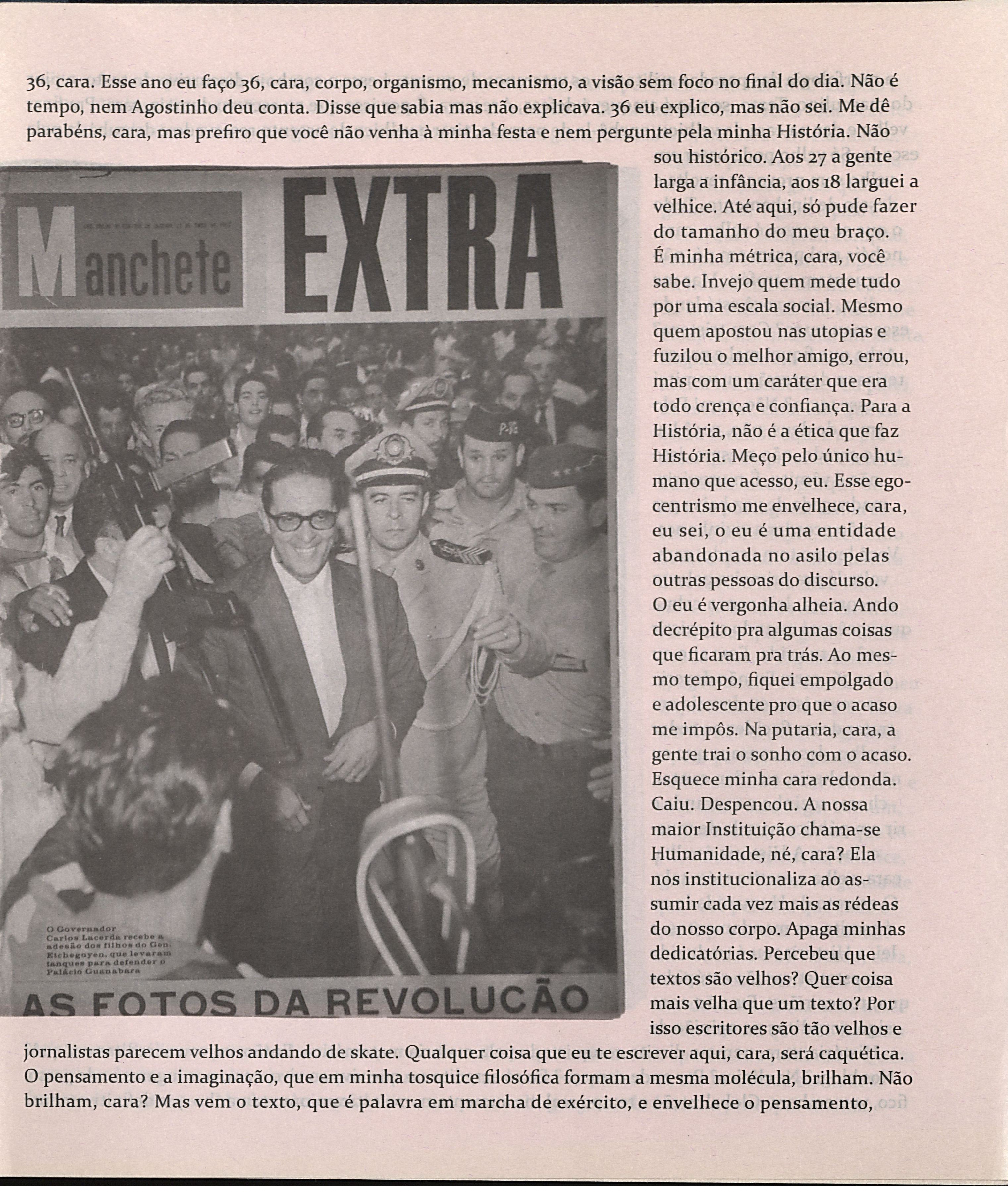
36 : Primeira pessoa, 1964-1968-1975-2011
8 folhas
30 x 26 cm.

Jornal distribuído durante a exposição “Símile-Fac” na Galeria Vermelho, São Paulo, no período de 24/01 a 18/02/2012. Sua capa reproduz a revista Manchete que, na época, anunciou o golpe de 1964 no Brasil. No interior do jornal, há a reprodução da primeira reportagem que saiu na grande imprensa brasileira sobre o Tropicalismo, na revista O Cruzeiro de abril de 1968. Margeando os fac-símiles históricos, há um texto em primeira pessoa, de alguém que se sente transpassado pela História e, ao mesmo tempo, gostaria de estar à margem dela.

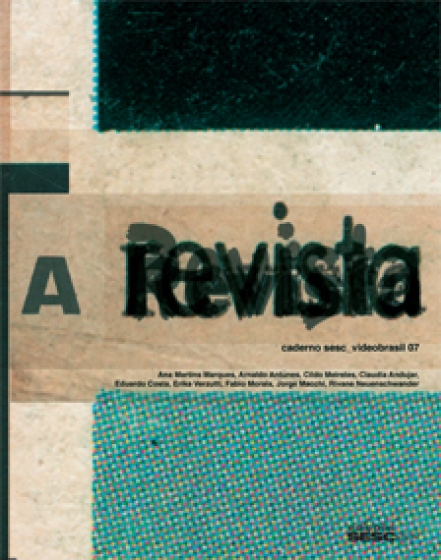
A Revista

20120706_204536_caderno-07_Caderno Sesc_Videobrasil 7: A Revista

Editor: Rodrigo Moura.
Colaboradores: Ana Martins Marques, Arnaldo Antunes, Cildo Meireles, Claudia Andujar, Eduardo Costa, Erika Verzutti, Fabio Morais, Jorge Macchi e Rivane Neuenschwander. Edições Sesc-SP e Associação Cultural Videobrasil, 2011
144 páginas. Português/inglês.
ISSN 1808-6675.
Largura: 18,5 cm/Altura: 23,5 cm Lombada: 1,3 cm

A Revista toma seu nome emprestado de uma célebre publicação literária de 1925, do grupo modernista de Belo Horizonte. Sob a edição de Rodrigo Moura e com design da artista Marilá Dardot, a edição propõe uma revista feita de páginas de revistas de arte, cultura e literatura publicadas no Brasil entre os anos 1920 e 1990, e fora de circulação.

Partindo da ideia de estabelecer relações entre trabalhos artísticos, textos e a mídia impressa, A Revista evoca o uso de revistas e suas páginas como espaço para a arte, tanto em projetos criados originalmente para periódicos brasileiros de arte quanto em intervenções pensadas ou cedidas por nove colaboradores: Ana Martins Marques, Arnaldo Antunes, Cildo Meireles, Claudia Andujar, Eduardo Costa, Erika Verzutti, Fabio Morais, Jorge Macchi e Rivane Neuenschwander.

Disponível para compra na loja virtual do SESC.

Acesse aqui o PDF da publicação.

http://site.videobrasil.org.br/publicacoes/caderno/07

Edited by the curator Rodrigo Moura, the seventh edition of Caderno SESC_Videobrasil, A Revista (Edições SESC; 144 pages) comprises excerpts from Brazilian art and culture magazines dating from the 1920s to the 1990s, in addition to works by artists and writers who comment on said publishing format. The magazine was designed by artist Marilá Dardot.

Faced with the rapidly changing media scenario, the seventh edition of the Caderno sets out to revisit the symbolical and physical character of magazines, not to reaffirm it as much as to deconstruct it and test its limits.

Caderno 7 borrows its title from the famous Minas Gerais-based publication A Revista, founded in 1930 by Carlos Drummond de Andrade and Emílio Moura. In cut-outs from magazines that played an important role in carving out a territory for art in Brazil, such as GAM, Módulo, and Arte em Revista, works by Hélio Oiticica, Lina Bo Bardi, and Nelson Leirner reemerge, among others.

Nine collaborators were invited to create projects specifically for the publication: Arnaldo Antunes, Rivane Neuenschwander, Fabio Morais, Jorge Macchi, Claudia Andujar, Ana Martins Marques, Cildo Meireles, Eduardo Costa, and Erika Verzutti. Pages, news, and typical magazine and newspaper formats inspire a significant share of the collaborations.

“The idea of establishing relationships between these artists’ oeuvres and the media revisited, and of combining written and visual language to create an exhibition of sorts throughout the pages of the publication, is what motivates the invitations,” explains Rodrigo Moura. An editor and art critic, Moura has been the curator of Instituto Inhotim (MG) since 2004.

Caderno SESC_Videobrasil is an annual publication dedicated to in-depth reflection on contemporary art production. Past editions have tackled the resurgence of performance art (2005); the impact of the contemporary experience of mobility (2006); experimentalism in audiovisual production (2007); space occupation strategies (2008); the feminine and feminism in art and life (2009); and contemporary power and influence relationships (2010).

Caderno SESC_Videobrasil 7 will be presented and launched during the last panel of the Southern Panoramas Seminars, Editorial Intentions: Who Reads and Who Writes, What For, on Saturday, December 10, 2:00 p.m. through 6:00 p.m., at SESC Belenzinho’s Concert Room 2. Further information: www.sescsp.org.br/17Festival

http://www.e-flux.com/announcements/new-publications/
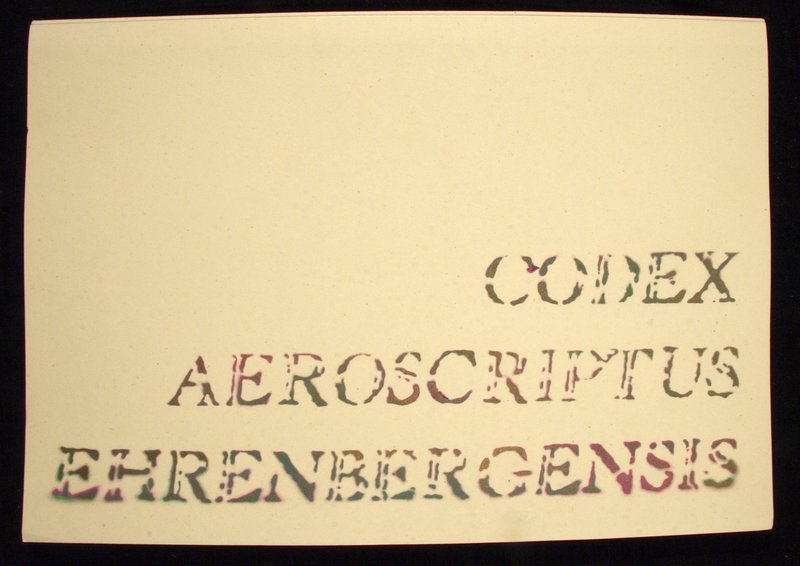
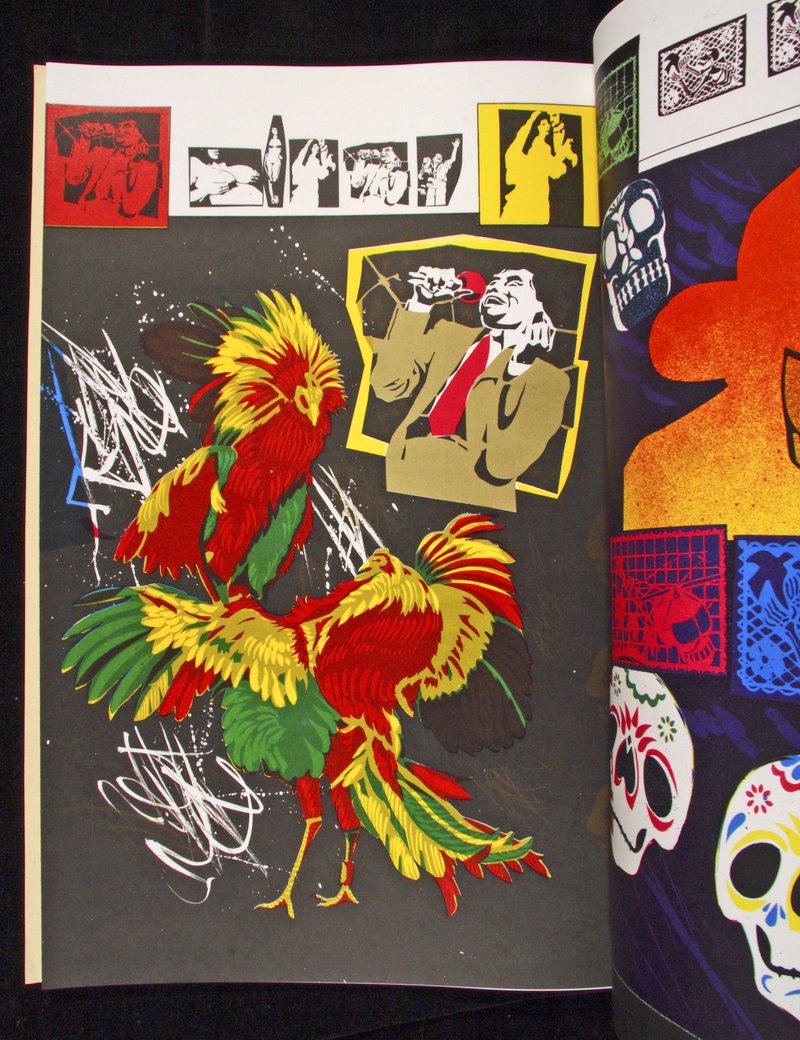
Codex Aeroscriptus Ehrenbergensis

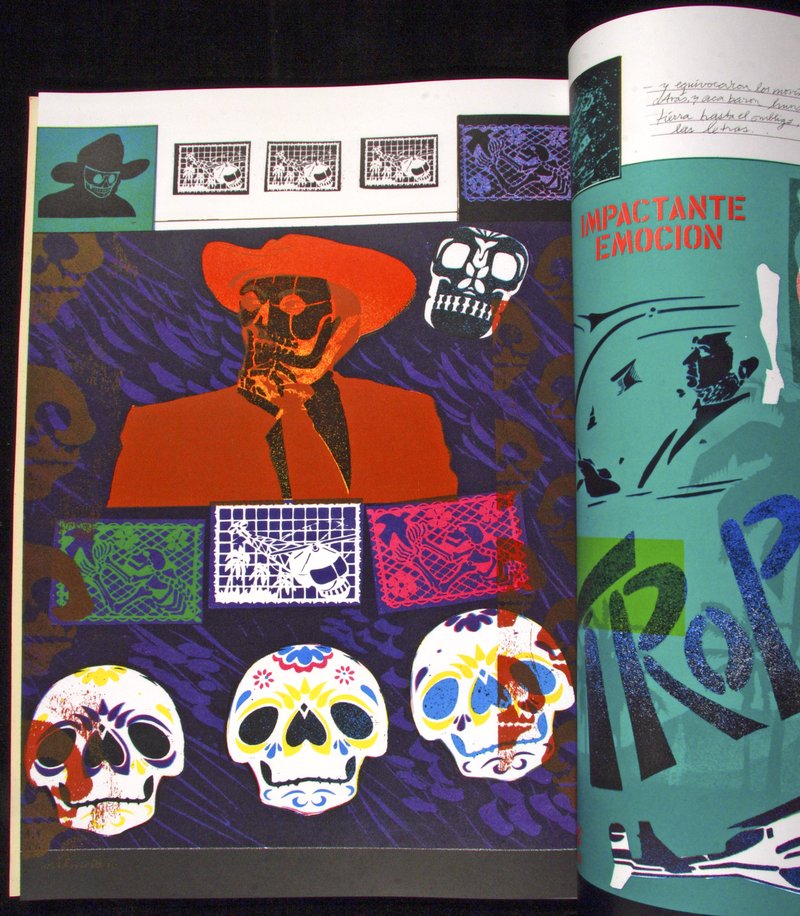
Uncatologed Codex Aeroscriptus Ehrenbergensis by Felipe Ehrenberg By means of manipulating stencils that were hand-cut for over a period 20 years, Mexican artist Felipe Ehrenberg creates a codex of the glyphs of contemporary life and culture. The result is a highly visual pre-Columbian, hard-boiled detective story. shot with digital Canon EOS 30D @600dpi date 8-21-07

Felipe Ehrenberg.
Codex Aeroscriptus Ehrenbergensis: a visual score of iconotropisms = una partitura visual de iconotropías
Atlanta: Nexus Press, 1990
43 x 30 cm.
500 ex.
Stiff paper cover, printed on double leaves folded at fore-edge.;
English and Spanish
Binding Side stitching
Offset

Uncatologed Codex Aeroscriptus Ehrenbergensis by Felipe Ehrenberg By means of manipulating stencils that were hand-cut for over a period 20 years, Mexican artist Felipe Ehrenberg creates a codex of the glyphs of contemporary life and culture. The result is a highly visual pre-Columbian, hard-boiled detective story. shot with digital Canon EOS 30D @600dpi date 8-21-07
“For this book (which, like many other codices, should ideally be read like a detective novel) I have laid out my best beloved stencils. With these I seek to offer viewers various clues that you may unravel the wondrous and dramatic events surrounding the life of this artist, another witness to the end of a century. This work is also intended to serve as a musical score, perhaps to be composed by someone wishing to recreate the background music of our daily histories.”

Colophon
“The images are all stencils drawn and hand-cut by the author, reduced to size and intervened on a Mita DC-1656 electrostatic photocopier.”

Uncatologed Codex Aeroscriptus Ehrenbergensis by Felipe Ehrenberg By means of manipulating stencils that were hand-cut for over a period 20 years, Mexican artist Felipe Ehrenberg creates a codex of the glyphs of contemporary life and culture. The result is a highly visual pre-Columbian, hard-boiled detective story. shot with digital Canon EOS 30D @600dpi date 8-21-07

Fonte imagens: http://publications.newberry.org/aztecs/s5i5.html

Salvar

What is it?

 E1P7-25

David Byrne asks you: What is it?
Pinspot #13
Santa Monica, CA : Smart Art Press, 2002.
1 cartaz dobrado em luva : il., fots. color.
22,3 x 15,5 cm.

Pinspot is a series of artist’s books that explore the printed page as an environment for unfettered creativity. A Pinspot book is an artist’s notebook, an area free of commercial restraints where artists can explore ideas, a printed multiple—anything but a catalogue. The artist may choose to use color images or only black and white, to collaborate with a writer or designer or to work alone, to incorporate text (anything from an artist’s statement to fiction or poetry) or let the images speak for themselves.

In Pinspot no.13, David Byrne Asks You: “WHAT IS IT?” This illustrated color volume folds out to a poster measuring 24×35”. Byrne’s photographs ask the viewers to guess what the abstracted images “really” are.