B.O.

E2P3-03

Matheus Rocha Pitta
B.O. Boletim de Ofertas (Offers Bulletin)
Rio de Janeiro, 2010.
[28] p.
30 x 24,5 cm.
Impressão em offset.

Publicação realizada com apoio do XI Prêmio Funarte Marc Ferrez de Fotografia. 2010

Saiu artigo na revista Artforum a respeito deste artista, o texto  comenta o trabalho mostrado acima.

Rio de Janeiro–based artist Matheus Rocha Pitta’s most recent work—B.O., or Boletim de Ofertas (Offers Bulletin), 2010—takes shape within this delirium of convertibility. A fourteen-page flyer officially launched this May at SP-Arte, Brazil’s largest art fair, B.O. is modeled on the coupon circulars one finds stacked near supermarket entrances and stuffed in the postbox with the mail. With their florid colors, cheap newsprint, and jostling, last-minute appeals, such circulars stage the built-in obsolescence of the commodity in a familiar parade of glistening produce and crisply geometric packages whose contents are subject to the volatility of inflation, expiration, and decay. In the pages of the coupon circular, products merrily proclaim their use-value at the same time that they broadcast their commodity status with the shriek of ninety-nine-cent deals.

Stripped of the busy chattering of advertising copy and photographed individually against a dense felt ground, the foodstuffs, sanitary products, and household items pictured in Rocha Pitta’s B.O. are left to act out this drama of solicitation on their own. Like those in the coupon circular, the identity of the commodities pictured in B.O. is conveyed primarily by the formal conventions of packaging: stackable tins of sardines with their thin metal lids, columnar tubes of cream-filled cookies, round discs of cheese. Yet in Rocha Pitta’s images, the enticing containment of the packaged product—all surface, buoyancy, and the promise of future reward—gives way to a pathos of bodily affect (a ham sweats with condensation, a wedge of cheese droops under the weight of its own rind). In addition, the external surfaces are breached and reconfigured to create a series of fundos falsos (false bottoms)—concealed receptacles for drugs (or other contraband goods) that have themselves disappeared. Thus, a six-pack of yogurt containers holds smaller, similarly shaped foil voids invaginated within; a roll of toilet paper is splayed open to reveal a hidden cavity; a sausage is sliced in half and hollowed out, its interior lined with protective plastic wrap. These are vessels that appear to have exhausted their role within the circuits of consumption. Ruptured and repurposed, their use-value migrating from the advertised content of the packaged foodstuffs to that content’s ability to package and conceal yet another value—that of the absent drugs—B.O.’s emptied commodities are consummate images of depleted value. And it was precisely as images that the products were introduced into yet another circuit of consumption, that of the art fair. Here, in a market designed to convert images from symbolic to financial value, B.O. enacted one final displacement, since the circular itself was distributed for free.

pitta _dani 056

Homemates

Homemates – capa

Guilherme Gerais
Homemates
Londrina/PR, 2009
21 x 14,8 cm
34 p.
30 ex.

Descrição: fotografias de uma república de estudantes em Londrina.

www.guilhermegerais.com

Neste link é possível visualizar o pdf do livro: http://issuu.com/guilhermegerais/docs/homemates_guilhermegerais

Salvar

Seleção Natural


Sandra Gamarra Heshiki
Seleção Natural – Tomo I, II e II
Lima (Peru) e São Paulo, Galeria Leme, 2009
3 v. : il. color.
caixa 26 x 20,5 x 1,5 cm.
Texto no Tomo I em espanhol, Tomo II em português e Tomo III em inglês.

hishiki_Seleccion-Natural-2-1

O livro, publicado em caixa contendo três volumes, reúne as pinturas que reproduzem apenas as páginas sobre artistas mulheres que aparecem nos três catálogos de arte contemporânea “Art Now”.

hishiki_Seleccion-Natural-3-1

A informação difundida em massa irradia uma aura de verdade entre os que a compartilham, ainda que saibamos que é o produto de uma seleção que implica sempre em um descarte.

Seleção natural reúne as páginas sobre artistas mulheres repetidas nos três catálogos de arte contemporânea “Art Now”. Ao fazê-lo, cria uma re-seleção como resposta ativa à totalidade da informação e seu consumo.

As pinturas de Seleção natural são apropriações que respeitam a diagramação do livro e pretendem conservar seu espírito de publicação para criar outra unidade, peneirada por seus próprios filtros, produzindo seus próprios descartes.

Como em uma tradução cuja linguagem é a pintura, o resultado é pessoal e parcial. O natural não é então o resultado, mas sim o ato de selecionar em si mesmo.

(texto na última página do livro)


hishiki_Seleccion-Natural-3-6

O livro está disponível em PDF no site da artista: http://li-mac.org/es/publicaciones/seleccion-natural-1/#/page/1

hishiki_Seleccion-Natural-2-13

cortesia Galeria Leme

Salvar

Nether Wallop

Brad Freeman
Nether Wallop
Chicago: JAB Books, 2008.
[96] p. : il. p&b
14,5 x 15 x 1 cm.
Impressão em offset
114 exemplares, numerados e assinados pelo autor.
Exemplar número 110

Notas de encadernação
Capa dura com pastas em papel cartão e dorso com revestimento em tecido

96 pages of a projected 192 pages have been offset printed by the author; the paper is French’s Newsprint (neutral pH and buffered);
4.5” x 4.5” (closed); casebound

O projeto apresentado pelo artista neste livro é explorar a relação entre o indivíduo e o gigante da economia global histórica. As fotografias e o texto do autor são justapostos com as imagens apropriadas de slides do início do século XX cujo propósito original era educar estudantes americanos sobre a estrutura da indústria. De fato, essas imagens escondem as verdadeiras condições de trabalho e degradação ambiental nas áreas colonizadas. Neste ponto crítico da história devem ser exploradas certas questões sobre as relações entre os poderes industrializados (militarizados) e as antigas colônias.

The project set forth by the artist in this book is to explore the relationship between the individual and the juggernaut of the historical global economy. The author’s photographs and text are juxtaposed with appropriated images from early 20th century lantern slides whose original purpose was to educate American students about the structure of industry. In fact, these images hide the true conditions of labor and environmental degradation in the colonized areas. At this critical point in history certain issues about the relationships between the industrialized (militarized) powers and the former colonies must be explored.


Superquadra

E1P7-03

Erik Van Der Weijde
Superquadra
Amsterdam: Roma, 2010
22,5 x 16 x 2 cm.

The large residential blocks in Brasilia are named Superquadras.
Each block, as repeating element in Lucio Costa’s master plan for
Brazil’s new capital, was built within a distinct configuration, with an average of eleven buildings raised on pilotis, with a height limit six floors.


http://www.erikvanderweijde.com/

Kaddish

E3P1-24

Christian Boltanski
Kaddish
München: New York, NY : G. Kehayoff Verlag, c1998.
27 x 21,5 x 5,5 cm.
Impressão em offset.
Publicado por ocasião da exposição Dernières années, ocorrida no Musée d’Art Moderne de la Ville de Paris, de 15 de maio a 04 de out. de 1998.

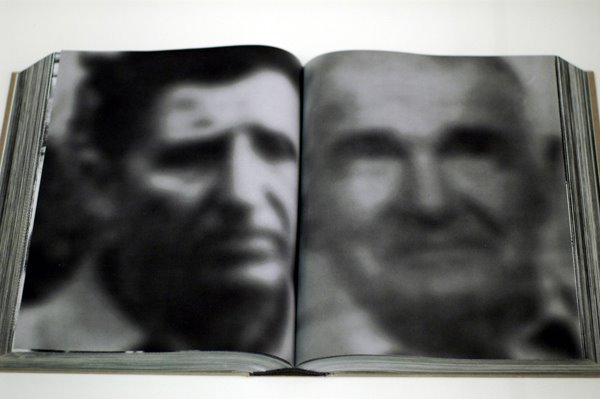
Este livro, em grande formato, já fazia parte do acervo da biblioteca da EBA/UFMG antes da Coleção Livro de Artista. Estava junto com os livros sobre fotografia, e agora está na coleção especial, junto com outro livro de Boltanski, o Archives.

BOLTANSKI_Kaddish

Christian Boltanski, Kaddish, 1998

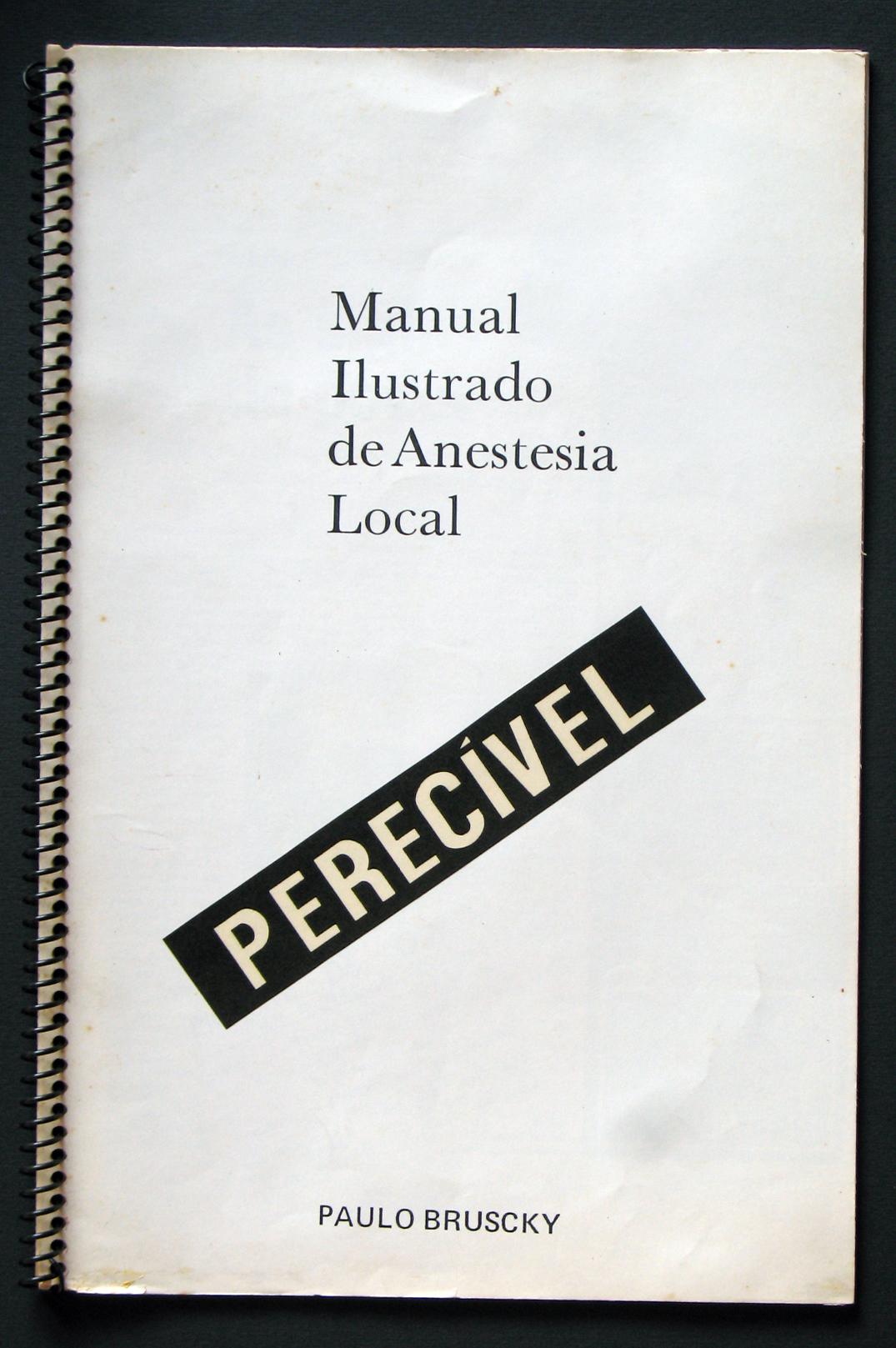
Manual Ilustrado de Anestesia Local

bruscky_manual

Paulo Bruscky.
Manual Ilustrado de Anestesia Local,
[Recife], 1992
fotocópia, carimbo
encadernação em espiral

Exemplar 6/15, assinado

Fotocópias de páginas de revistas mostrando escândalos de corrupção envolvendo o então presidente Collor. Sobrepostas à reportagem, um carimbo em vermelho com a palavra DEPUTADOS, com as quatro letras do meio maiores do que as outras, formando outra palavra, e o “s” cortado por duas linhas paralelas, como um cifrão. Fotografias e desenhos mostrando a anestesia sendo aplicada em diversas partes do corpo, um carimbo de um inseto (uma pulga?) e cópias de folhetos de “compro ouro” (um dos folhetos destaca a frase “não compro ouro de ladrão”).

Salvar