Conversas – Flying Letters Manifestos

conversas flying
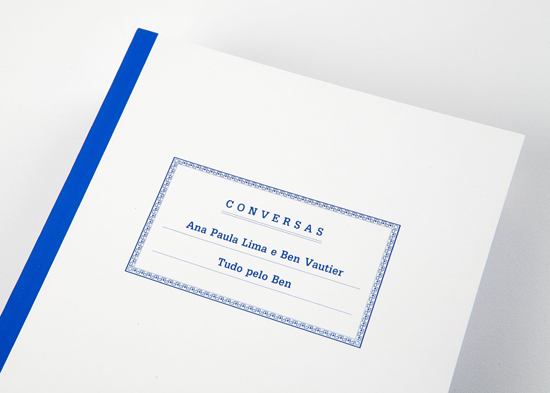
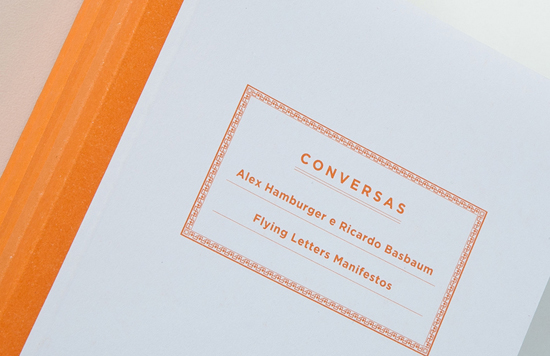
Conversas [Flying Letters Manifestos]
Alex Hamburger e Ricardo Basbaum
par(ent)esis,  2013
Florianópolis, SC
português e inglês
brochura
11 x 16 cm
154 p.

Flying Letters Manifestos registra a troca de cartas entre os artistas Alex Hamburger e Ricardo Basbaum durante o período compreendido entre 1993 e 1995. Segue abaixo um fragmento:

“Caro Basbaum: eis me aqui já respondendo o seu belo cartão postal from London, assim, numa tentativa de escrita circular que procura simbolizar a volta redonda do globo, particularmente vivida pela sua viagem/deslocamento planetário-territorial-urbano. Aqui, “estamos” todos razoavelmente bem, o país cada vez mais afundando, não sei se chegam notícias nítidas até você, e os artistas compulsivamente levando no peito e na raça suas árduas sinas, quase sempre com ótimos resultados!”

Fonte da imagem: http://www.plataformaparentesis.com/site/publicacoes/conversas-3.php

Azione Terza Via

azione-terza-iniziativa-promozionale-f7e83139-84c6-48c4-8726-06cc17d4807e

Joseph Beuys (Alemanha, 1921-1986)
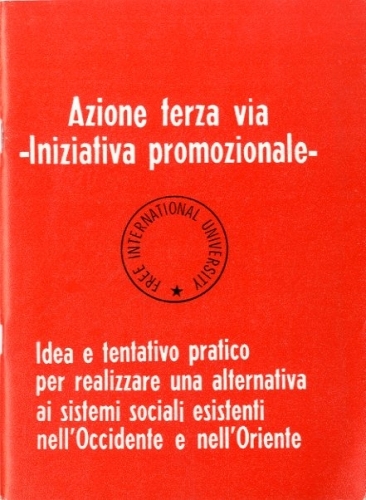
Azione Terza Via: Iniziativa promozionale: Idea e tentativo pratico per realizzare una alternativa ai sistemi sociali esistenti nell’Occidente e nell’Oriente
texto em italiano
Edizione Carte Segrete, 1993 [1978]
80 p.

Esta edição italiana de “Aktion Dritter Weg – aufbauinitiative” foi apresentada oficialmente em 12 de fevereiro de 1978 em Pescara, por ocasião da palestra de Beuys sobre o tema “Istituto per la Rinascita dell’Agricoltura”. O artista apresentou pela primeira vez na Itália a F.I.U. (Free International University), apresentada na Documenta VI, Kassel, no periodo de junho-setembro 1977.

Fonte da imagem: http://www.maremagnum.com/

AMMCQ AIYCI IAOSA QIEIQ MAOSC OIGOO QIMWI WIAGI YAQA

Voir détailAMMCQ AIYCI IAOSA QIEIQ MAOSC OIGOO QIMWI WIAGI YAQA
Anonyme

[56 pag]
offset noir & blanc
18 x 11 cm.
isbn 2-914291-24-8, 5€.
Rennes, Incertain Sens, 2005

Voir détail DétailNom(s) de(s) l’auteur(s) crypté(s), titre(s) crypté(s), contenu crypté.

[Uma parte do livro foi decifrada em março de 2009 por um estudante na escola de arte com a ajuda de um computador]

Link

Link

Peter Downsbrough
Link
Hatje Cantz, 2015
300 ex.

link


Este é o 100º livro de artista da carreira do artista conceitual americano Peter Downsbrough (1940, New Jersey, vive em Bruxelas) e foi criado para uma exposição realizada em Barcelona (22.02 a 19.05.2013) com todas as suas publicações feitas desde 1968. Link é o resultado de uma colaboração entre o artista e o curador da exposição, Moritz Küng, em que a Hatje Cantz se envolveu como co-editora. A grande particularidade deste livro, que possui apenas algumas páginas e foi impresso em apenas 300 exemplares é que ele não pode ser comprado. Uma sobrecapa especialmente concebida por Downsbrough informa: “Este livro não está à venda e só pode ser adquirido trocando-o por outro livro.

Veja entrevista com o curador da mostra: http://huskmagazine.com/peter-downsbroughs-link/

Aqui está um livro de valor inestimável, que não pode ser comprado. Como indicado no site da Hatje Cantz, Peter Downsbrough “criou um volume minimalista, delicado, em uma edição limitada de 300, que liga o leitor ao autor: LINK não pode ser comprado, e só pode ser trocado por outro livro, de qualquer tipo. Envie um livro de sua escolha e deixe-se surpreender”. A troca não vai ser possível para sempre, uma vez que existem apenas 300 cópias disponíveis.
Em uma referência circular à arte conceitual, enviei um livro de artista do Lawrence Weiner. Poucos dias depois, veio LINK do Peter Downsbrough, um volume fino, e um gesto simpático.
(via artpluspaper)

Here is a priceless book, that can’t be bought.

As stated on Hatje Cantz website, Peter Downsbrough “ has created a minimalist, delicate volume in a limited edition of 300, which connects the reader with the author: LINK cannot be bought, and can only be exchanged for another book, of any sort. Send a book of your choice and let yourself be surprised.” The swap won’t be possible forever, as there are only 300 copies available.

In a circular reference to conceptual art, I sent an artist book by Lawrence Weiner. A few days later came Peter Downsbrough’s LINK, a thin volume, and a nice gesture.

Art & Project Bulletins

 art-and-bulletin

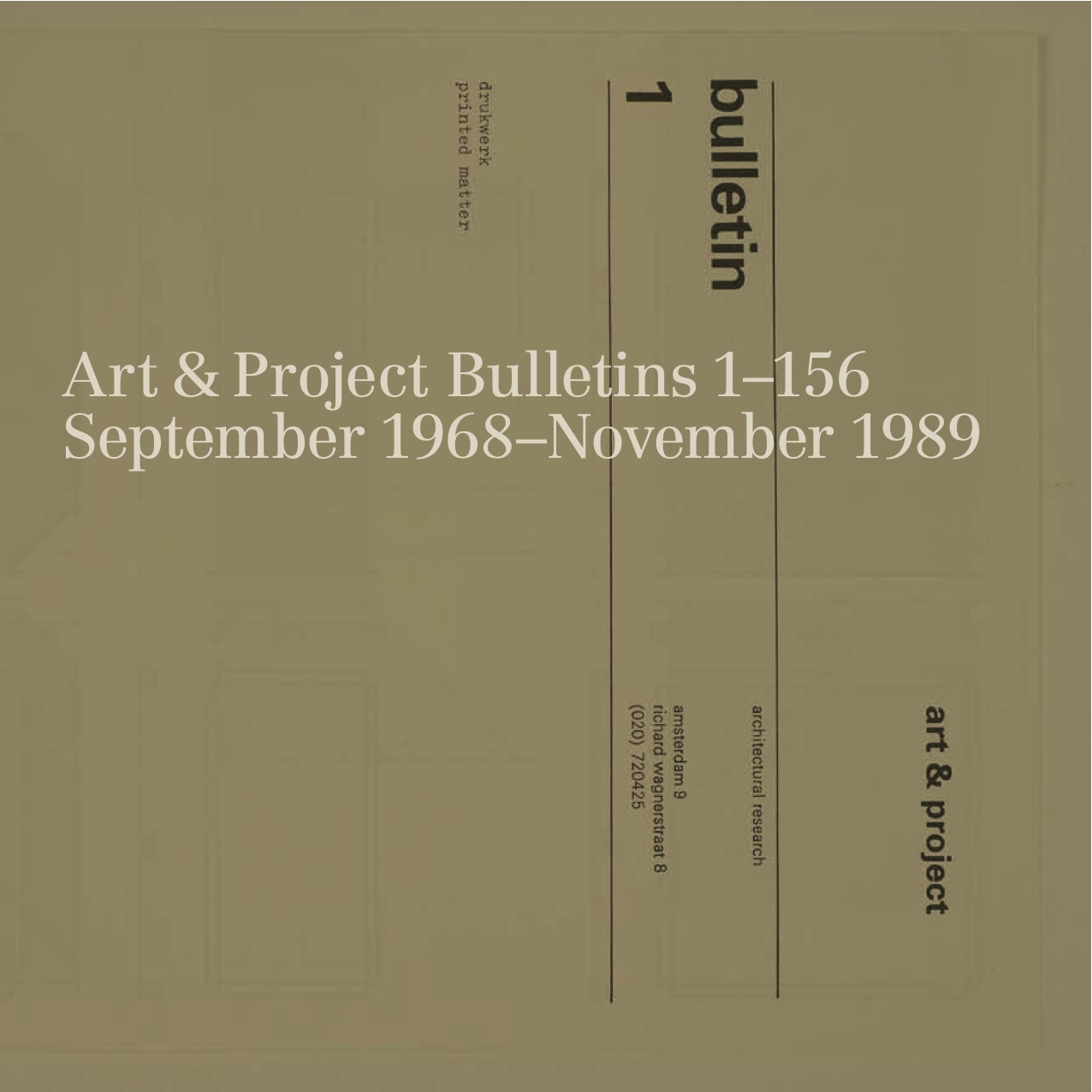
Art & Project Bulletins 1-156: September 1968-November 1989.
offset, p&b
22,5 x 22,5 cm.
84 p.
ISBN 9782953934717
Edição de 1000 cópias.
Cabinet Gallery, London, 20th Century Art Archvies, Cambridge e Christophe Daviet-Thery Paris.

‘Art is to change what you expect from it’ Seth Siegelaub

Catálogo de exposição /  monografia publicada em conjunto com mostra realizada no Cabinet Gallery, Londres, 17 de outubro a 23 de dezembro de 2011. Texto de Clive Phillpot. Entrevista com Adriaan van Ravesteijn e Tin Geerts. Editado por Louise Riley-Smith. Projeto gráfico de Jerome Saint-Loubert Bié. Documenta as 156 edições do Art & Project Bulletin publicadas e distribuídas entre 1968 e 1989.
Exhibition catalogue / monograph published in conjunction with show held at Cabinet Gallery, London, October 17 – December 23, 2011; & Christophe Daviet-Thery Livres et éditions d’artistes, Paris, October 27 – December 23, 2011. Text by Clive Phillpot. Interview between Adriaan van Ravesteijn and Tin Geerts. Edited by Louise Riley-Smith. Design by Jérome Saint-Loubert Bié. Documents the 156 Art & Project Bulletins published between 1968 and 1989.

Kenneth Goldsmith: the New York Trilogy

goldsmith2

Kenneth Goldsmith: the New York Trilogy

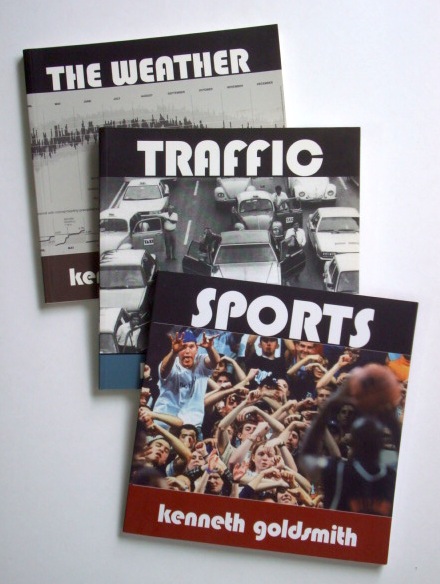
Kenneth Goldsmith’s “conceptual writing” has been the subject of some debate in recent years, much of it fuelled by Goldsmith’s provocative and quotable quotes. In interviews and theoretical essays, Goldsmith refers to his writing as “boring”, “unreadable”, “uncreative”, and even describes himself as “the most boring writer that has ever lived” (from Goldsmith’s Conceptual Writing Journal. See also the extensive bibliography on his EPC site). While such quotes make “controversial” copy for literary journals and fodder for online debates, it seems that much of the critical material on his writing is actually framed by Goldsmith’s own terms. He has shaped the discussion of his own work so that it focuses almost exclusively on the creative processes he uses and his theories about them. To emphasize this focus on the process rather than the end product, Goldsmith stated recently: “You really don’t need to read my books to get the idea of what they’re like; you just need to know the general concept.” (Conceptual Writing Journal) Given that the author died some time late last century, why are we still intent on granting authority to his (sic) ghostly voice? In the following reading of Goldsmith’s recently completed Trilogy – comprising the books Weather (2005), Traffic (2007) and Sports (2008) – I want to put aside Goldsmith’s framing of his work as merely conceptual processes and instead attempt to read the unreadable.

The process common to all three books of the Trilogy is transcription: transferring oral language into written language. In Weather, Goldsmith transcribes a year’s worth of daily weather reports from a radio station; in Traffic, he transcribes a twenty-four hour period of traffic reports at ten minute intervals; and in Sports, he transcribes an entire Yankees-Red Sox baseball commentary. This kind of appropriation and reframing has many precedents in twentieth century creative (or uncreative, if you will) practice, and Goldsmith himself has pointed out many of these — Dada, Conceptual Art, Fluxus, Pop Art, Language Poetry — in fact, Goldsmith’s remarkable Ubuweb can be seen as an ongoing charting of this territory. While the idea of creativity as simply recontextualizing something already out there in the world seems hardly revolutionary in the visual art world, for some reason poetry, at least in its popular understanding, seems inextricably linked to individual expression. Poetry has remained, for some at least, the last bastion of the personal, the private, the intimate and the profound. If we were to adopt this definition of poetry as profound and personal, Goldsmith’s transcriptions of public voices communicating everyday information would seem boring and trivial. But are Goldsmith’s books any more mundane than, say, Richard Prince’s Cowboy series, comprising photographs of cowboys appropriated from various Marlboro advertisements? Are these books unreadable? Perhaps not for a generation growing up in a culture that is comfortable with “uncreative” musical forms such as mashups, regurgitating past design and fashion styles in various manifestations of retro, and the staged intimacy of MySpace and Big Brother.

Although Goldsmith has referred to this trio of books as his “American Trilogy”, the subject matter is actually more specific than that. Despite the implication of conceptual writing’s universality, these works are the product of a particular American city, New York (although many New Yorkers seem to believe that New York is America). The “New York” Trilogy is also more fitting given the specificity of the material Goldsmith appropriates – New York City weather reports (Weather), New York City traffic reports (Traffic) and the commentary from a New York Yankees baseball game (Sports). On this note, earlier Goldsmith books might also be seen in a New York context. In Soliloquy (2001), for example, he transcribed every word he spoke for a week, and given he lives in Manhattan, New York references abound. In Day (2003), he transcribed every word of the New York Times. Rather than read Goldsmith’s New York Trilogy as simply the end product of conceptual processes, it is also productive to read the Trilogy as the documentation of the specific rhythms and voices of twenty-first century New York.

via: http://djhuppatz.blogspot.com.br/2008/08/kenneth-goldsmith-new-york-trilogy.html

Histórias de Península e Praia Grande

severo-peninsulas-e-praia-grande

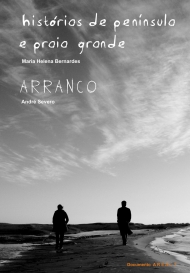
Histórias de Península e Praia Grande / ARRANCO é o resultado de uma série de viagens realizadas no período de julho a novembro de 2009, entre os municípios de Tavares e Chuí, no Litoral Sul do Rio Grande do Sul. Os artistas percorreram paisagem de areais, mar aberto, campos e lagoas, praias da costa doce e salgada, ouvindo histórias e colhendo impressões da paisagem natural e humana descobertas ao longo dessa investigação. Os escritos de Maria Helena e as imagens coletadas por André Severo traduzem as impressões dos dois viajantes em uma fusão de passado e presente, já que outras viagens por essa região – que constitui uma espécie de centro poético do Projeto Areal – vem sendo realizadas por ambos nos últimos dez anos.

O livro Histórias de Península e Praia Grande reúne pequenas histórias orais anotadas por Maria Helena Bernardes durante as viagens. O filme ARRANCO, dirigido por André Severo, traz quatro seqüências que traduzem em imagem, tempo e símbolo a amplidão e o imaginário de quem habita aqueles areais do Sul. O filme vem encartado na edição do livro.

O lançamento de Histórias de Península e Praia Grande / ARRANCO integra a programação das atividades simultâneas da exposição Horizonte Expandido, como parte das comemorações dos dez anos do Projeto Areal.

Consciência Errante

severo_Consciencia-errante

Autor:André Severo
ISBN13:9788575311509
ISBN10:8575311506
Número de Páginas:168
Número Edição:1
Ano Edição:2004

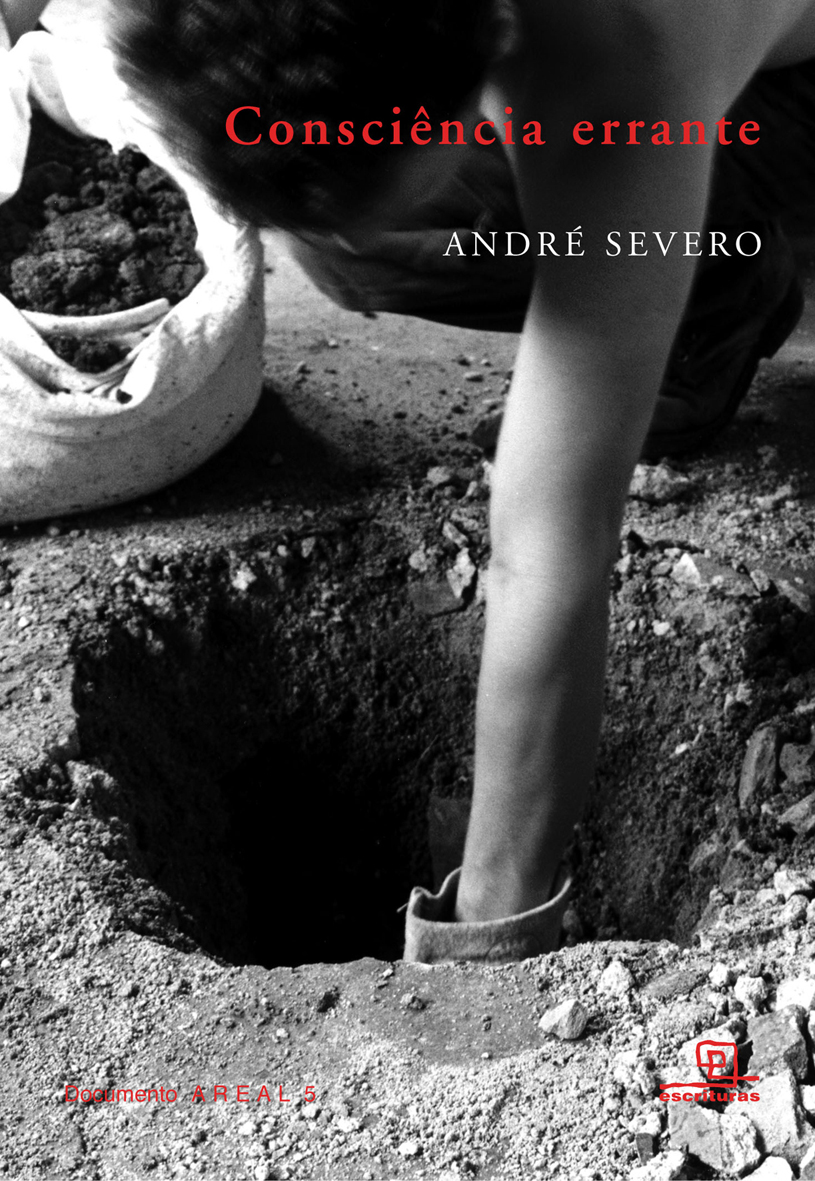
O leitor de Consciência errante (selo Escrituras) é convidado a traçar, por meio de cogitações oblíquas e dissipações enviesadas, o caminho encruzilhado por André Severo ao longo de Migração, experiência desenvolvida pelo autor em Areal e constituída da transmutação de parcelas de matéria provenientes de uma região inóspita para o terreno movediço da investigação artística.

Após cumprir roteiro de um ano de viagens em que transmutou parcelas de solo escavado de diferentes pontos da metade sul do Rio Grande do Sul, tendo como ponto de partida seu atelier, em Porto Alegre, André Severo retornou à cidade para encerrar a ação, soterrando doze porções de resíduo em igual número de buracos, conservados abertos em seu atelier durante aquele ano.

O gesto selou também o fechamento definitivo do local de trabalho do artista. Além da reprodução parcial de registro fotográfico da ação, o quarto livro da série Documento Areal, compõe-se de textos redigidos durante um ciclo de intervenções de caráter bruto e braçal (escavações, enterro e transporte de resíduos), intercalados por profundos mergulhos reflexivos, fundadores desses ensaios, sorte de arqueologia inexata em torno da ideia de erradicação.

Consciência errante faz parte da série Documento Areal, contemplada pela 2ª seleção do Programa Petrobras Artes Visuais, que propõe uma arte investigativa e inovadora que traça um panorama de viagem experimental que o Projeto Areal vem compreendendo.