Cut

cut-website-01

Marie Bocquet
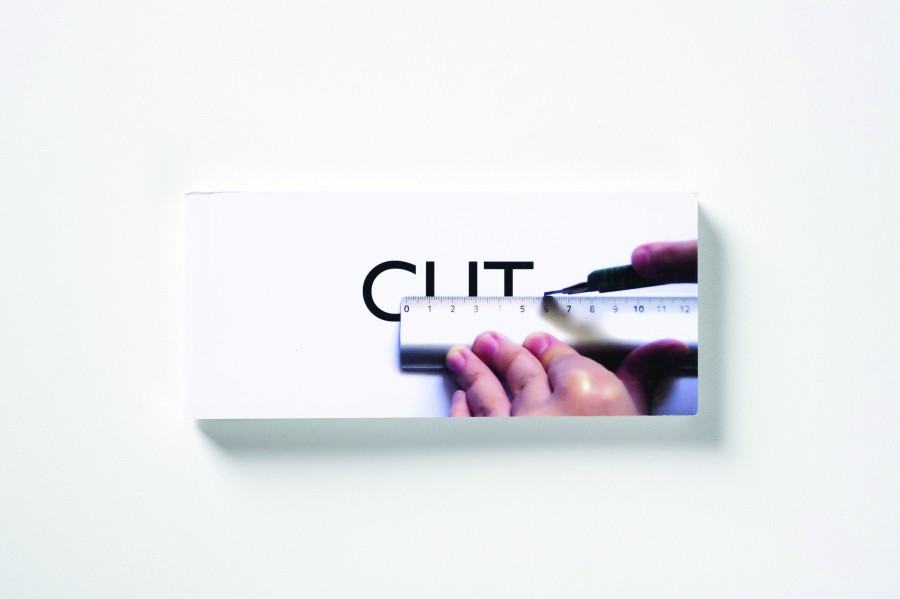
CUT
Rennes, Lendroit , 2009
6,5 x 15 cm
96 p.
ISBN 978-2-917427-12-5

flipbook_3

” As we start to skim through the pages, the box cutter seems to slide along the ruler and we think that nothing happens… Suddenly, the pages happens to be cut as if we have held the box cutter in our own hands. Magic of flip book! Artist’s inventiveness! Marie Bocquet did know how to combine imagination, simplicity of an everyday act and the sophistication that makes an object original and unique.

Everybody can make a flip book and that seems to be very simple, but to make a good one requires several skills: first a good idea and then a true sense of animation. It is this combination which makes the flip book work, ensures its fluidity and surprises us.

Artists ‒some of the greatest‒ have been interested in flip books since the second half of the 20th century. Painters, sculptors, draftsmen, photographers and specialists in animation have sometimes taken it like a game among many other works and often without any special presumption. The greatest successes are usually the simplest and this is the case here.

Marie Bocquet is a graphic designer, for example, she had realized a whole work of creation on the word “cut”. It’s all naturally that she may assimilate the flip book technique to offer us this attractive object. Like the American artist Julia Featheringill, she have defaced a very simple situation to produce an artistic work.

This feat had been awarded in the first international flip book competition of Rennes in April 2007.”

Pascal Fouché

O livro está disponível em vídeo no site da artista:

http://www.mariebocquet.com/galerie_flipbook.html

http://www.lendroit.org/catalogue/fiches/248-CUT
La dérive

laderive

Corinne Janier
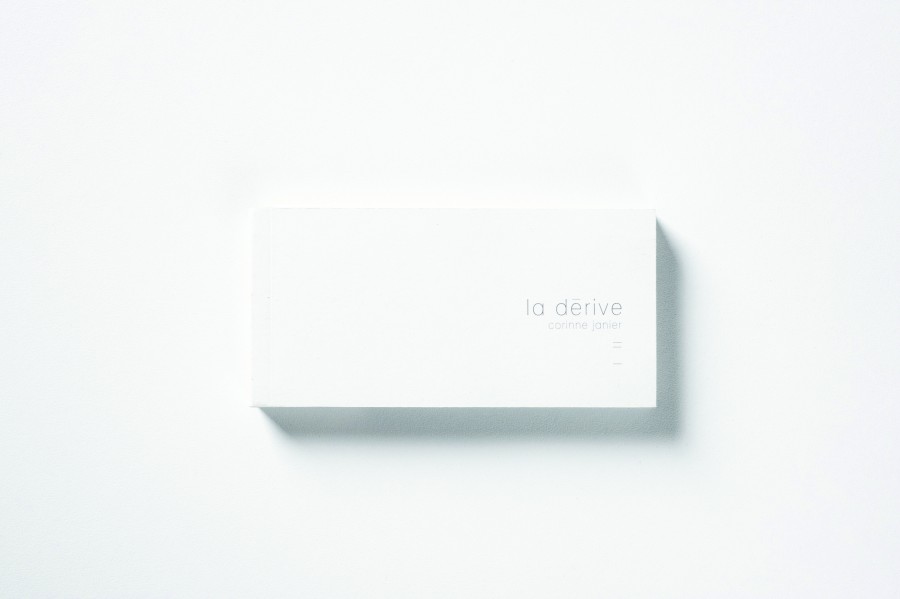
La dérive
Rennes, Lendroit, 2001
offset, p&b
12 x 6 cm
180 p.
ISBN 978-2-917427-00-2


“Those who live  to the drift are not all poets, but the poets all live adrift”

“At first almost nothing. The convergence of coincidences that I like to think drifting : a lot of old photos, some of which remained at the stage of contact prints, that a friend Clémentine has found on a flea market stall. Then the founded magic in this family images probably passed on the French coast between 1930 and 1940 : kids in vintage swimwear playing on the beach, family portraits together on a rock, prestigious interior views just before the meal, smiles stolen from the deck of a sailboat at the sea… Later then, some of the prints were hypothetically attributed to the German artist Germaine Krull, regularly solicited during this time, i’ve been told, for orders of this type from wealthy French families.

But when I extract from this set, the image of this diver, I wasn’t yet aware of this expertise. At the moment of its discovery, I felt the need to appropriate myself of this photo, which no doubt I would have loved to be the author. From the only print contact (cause I couldn’t find the original negative), I reproduced, expanded and multiplied it.

This body that seemed to have been trimmed to the surface of the this black sea, frozen in the trajectory of its plunge into the ominous silence of a black and white landscape, attracted me and it echoes in my photographic concerns.

First its generic nature : it seemed as if we had wanted to draw a diver above the sea, it would have made this image. Then its disturbing strangeness related to this body that we don’t know the face, in that sea where we can’t see the horizon, to this movement stopped in his tracks whose fall seems latent and inevitable.

The body crosses the water’s surface. The sea opens and the produced shock breaks the silence of this peaceful setting for a summer afternoon. Or maybe not…”

Corinne Janier

Lyon, October 2007

https://www.corinnejaniercolombel.com/edition
http://www.lendroit.org/catalogue/fiches/73-La-derive

Nuancier

1feb29f6c037c11be6e2ea108046b225

Pierre David
Nuancier
Paris, RVB Books, 2014
28 x 6 x 2,5 cm
1.200 ex.
(édition originale à 250 exemplaires, 2009)

Comercializar a cor da pele dos funcionários do museu

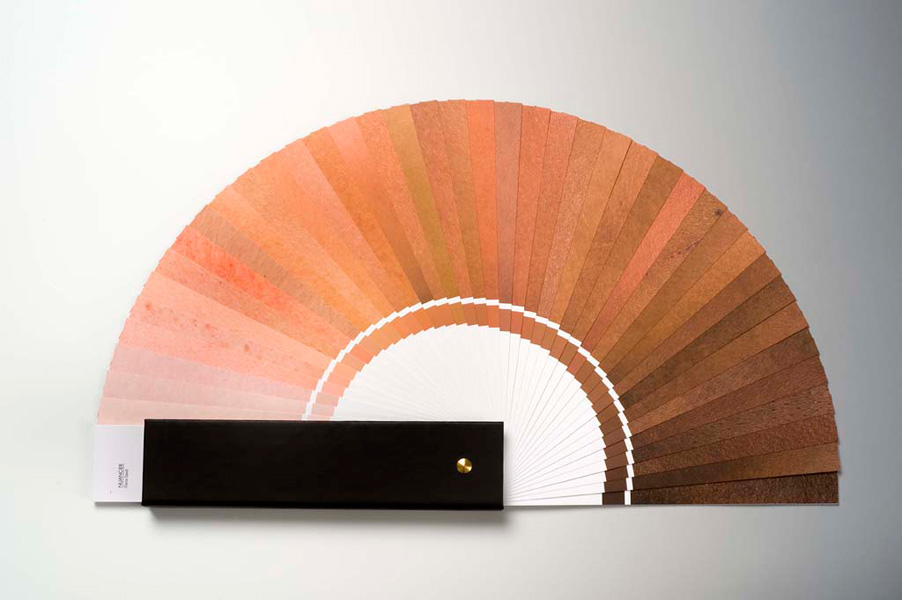
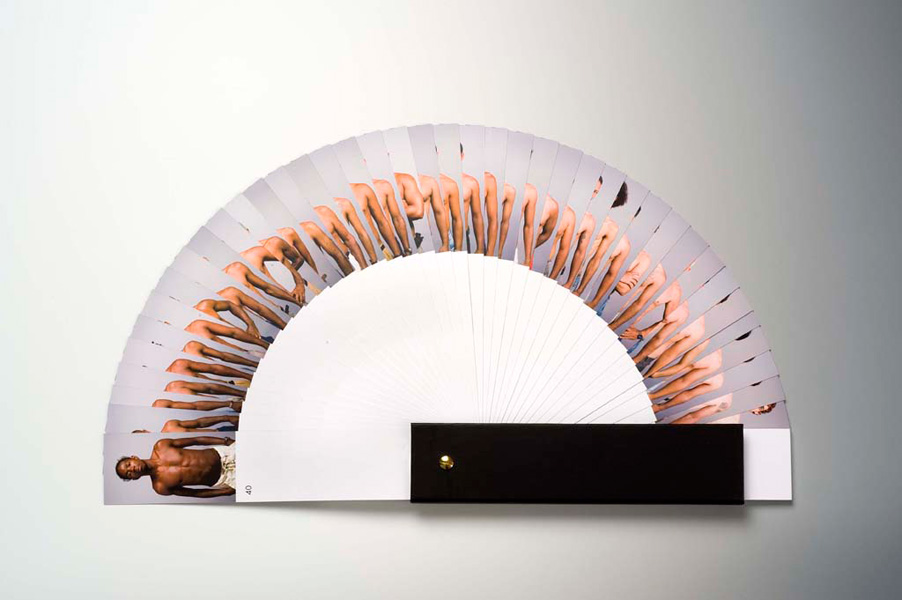
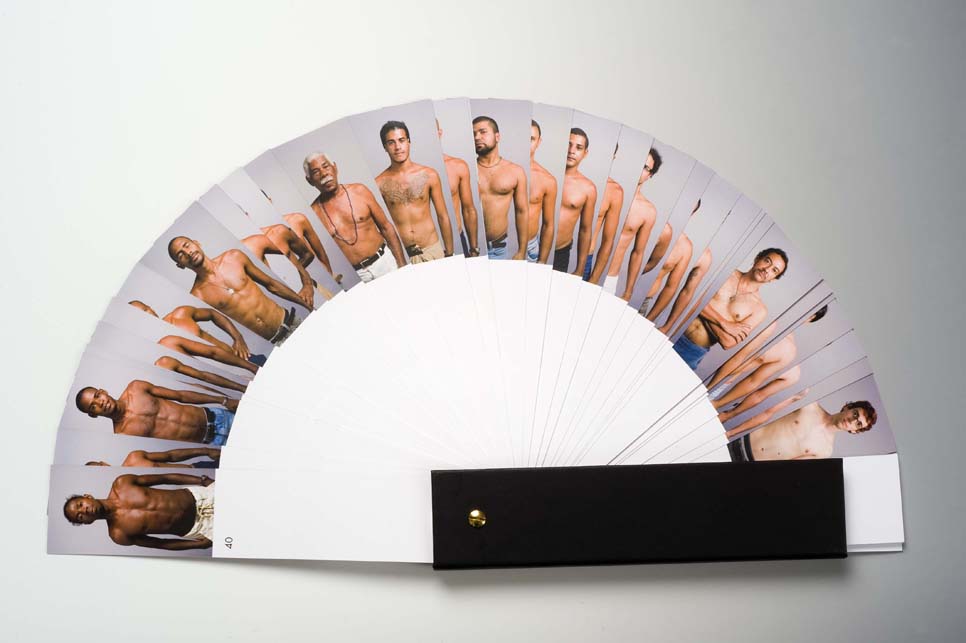
“A cartela de cores faz parte de um conjunto de trabalhos, desenvolvidos há vários anos sobre os critérios de escolha de modelos. Para este projeto, o meu interesse se concentrou na cor da pele. A epiderme das costas de quarenta homens, todos funcionários do museu foram fotografados e colocados juntos em uma cartela de cores.
A fabricante de tintas Sikkens / AkzoNobel desenvolveu as fórmulas químicas para a fabricação industrial das quarenta tonalidades.
A cartela de cores Nuancier foi feita durante uma residência no Museu de Arte Moderna de Salvador da Bahia, em 2008 e 2009.
A primeira apresentação da peça Nuancier aconteceu durante uma exposição individual no MAM Salvador da Bahia, como parte do ano da França no Brasil em 2009”.

0db398bc970c9b954fc2cf1d30a1d9f2

Commercialiser la couleur de la peau des employés d’un musée

Nuancier fait partie d’un ensemble de travaux, développés depuis plusieurs années sur les critères de choix des modèles. Pour ce projet, mon intérêt s’est focalisé sur la couleur de la peau. L’épiderme du dos de quarante hommes, tous employés du musée a été photographié et réuni dans un nuancier de couleurs.
Le fabricant de peinture Sikkens/AkzoNobel a mis au point les formules chimiques permettant la fabrication industrielle des quarante teintes.
Nuancier a été réalisée lors d’une résidence au Musée d’Art Moderne de Salvador da Bahia, en 2008 et 2009.
La première présentation de la pièce Nuancier eu lieu lors d’une exposition personnelle au MAM de Salvador da Bahia, dans le cadre de l’année de la France au Brésil 2009.

Nuancier

http://www.pierredavid.net